ROLI Enters Administration for a Second Time
ROLI, the British music technology company behind the Seaboard, Blocks and other expressive instruments, has entered administration for the second time. Two licensed insolvency practitioners from RSM UK Restructuring Advisory were appointed as joint administrators on 20 October 2026. Administration is the UK process used to manage an insolvent company while administrators assess whether it can be rescued, sold or wound down.
The latest collapse has left customers searching for information about unfulfilled orders, refunds and ongoing product support. ROLI has reportedly not published a clear explanation of its future strategy, while the company and its founder, Roland Lamb, did not respond to requests for comment. The appointment of administrators does not automatically mean that every product or service has stopped working, but it places the company’s business, assets and intellectual property under formal insolvency management.
Customers Fear Lost Orders and Unusable Instruments
Users across Reddit, Facebook groups and online forums say they paid hundreds or thousands of dollars for ROLI products without receiving their orders or refunds. Some complaints relate to purchases made months or even years ago, with customers claiming they have been unable to obtain meaningful responses from the company. These buyers may now have to pursue claims through the administration process, where unsecured creditors commonly face uncertainty over how much, if anything, they will recover.
Existing owners face a different but equally serious concern: whether their instruments will remain usable as ROLI’s software infrastructure deteriorates. Many ROLI devices depend on proprietary launchers and companion applications for configuration, sound mapping, updates and access to certain features. Although the physical hardware may continue to function, the loss of servers, software maintenance or authentication services could gradually reduce what owners can do with their instruments.
The situation highlights a weakness in connected musical hardware. A conventional keyboard can often remain useful for decades with little more than a MIDI connection, whereas a software-dependent instrument may rely on a company’s continued existence. Customers are therefore not only buying a device but also depending on a long-term ecosystem of applications, drivers, accounts and cloud services.
From Seaboard Innovation to Financial Distress
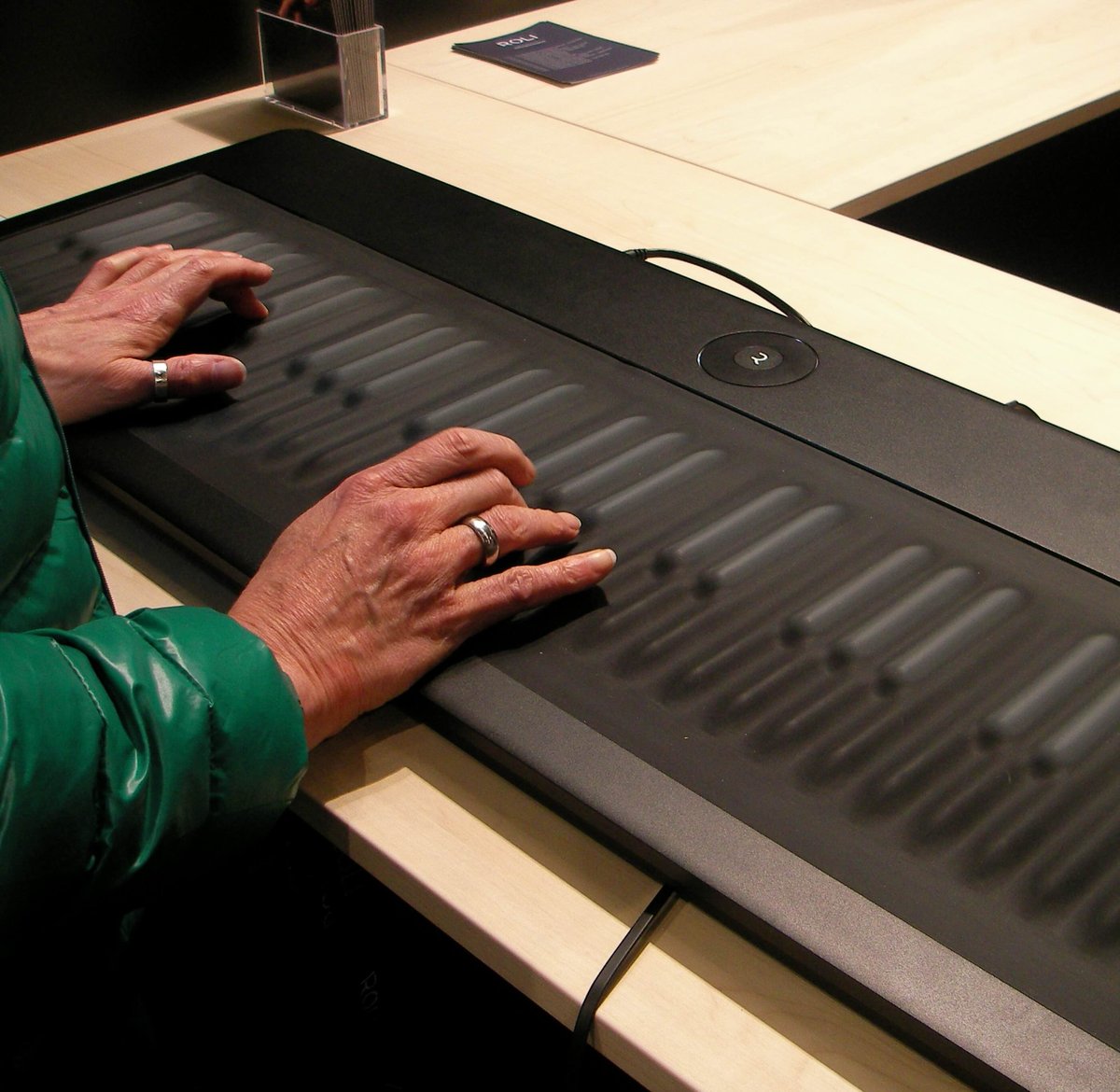
ROLI earned attention by developing instruments that made touch, pitch and timbral control central to performance. Its Seaboard products helped popularise MIDI Polyphonic Expression, or MPE, which allows players to manipulate individual notes with movements such as sliding, pressing and varying touch. The company attracted high-profile support, including investment from Pharrell Williams and Sony’s Innovation Fund, while its instruments appeared in professional music and popular culture.
The company’s commercial ambitions were matched by substantial operational challenges. ROLI struggled with pandemic-era supply-chain disruption and entered administration for the first time in 2021. It later relaunched as Luminary ROLI, placing greater emphasis on learning products such as the Lumi keyboard and Airwave, a gesture-controlled instrument designed to support piano education.
Accounts cited in insolvency reporting show how difficult the financial position had become. Luminary ROLI recorded turnover of approximately £8.4 million for the year to June 2024, but its operating loss rose to around £24.7 million and net liabilities reached approximately £27.2 million. Ultraleap, meanwhile, reported turnover of £1.2 million for the six months to June 2024, alongside an operating loss of £13.6 million and net liabilities exceeding £62.8 million.
Ultraleap’s Collapse Extends the Damage Beyond Music
ROLI’s insolvency has also engulfed Ultraleap, the Bristol-founded company known for hand tracking and mid-air haptics. RSM appointed Damian Webb and Joe Barry as joint administrators of Ultraleap on 19 October 2026, shortly before their appointment to Luminary ROLI. Administrators said the company had explored funding and restructuring options but could not complete a solvent solution within the available timeframe.
Ultraleap began as Ultrahaptics, a University of Bristol spinout that used ultrasound to create tactile sensations in mid-air. It later adopted the Ultraleap name after acquiring US hand-tracking company Leap Motion, building technology for applications including virtual reality, augmented reality, automotive systems and digital signage. Its failure represents a setback for Bristol’s deep-tech ecosystem, particularly as engineers and researchers with specialised tracking and haptics expertise face an uncertain future.
ROLI announced its acquisition of Ultraleap in November 2025, with the technology redirected towards music education. Ultraleap’s hand tracking became part of Airwave, which ROLI positioned as a component of its broader Piano System alongside its hardware and learning software. Companies House records show that Luminary ROLI held complete ownership of Ultraleap, linking the fate of the Bristol technology business directly to the financial difficulties of its parent.
The administrators are now managing the companies’ affairs, businesses and property while considering possible asset sales. RSM has said discussions with prospective parties were continuing over certain assets and intellectual property, and that a small number of employees had been retained temporarily to help preserve and transfer key assets. This creates the possibility that individual technologies, brands or patents could survive under new ownership even if the existing businesses do not.
Independent Fixes Offer Owners a Way Forward
Some ROLI users are already attempting to reduce their dependence on the company’s official software. Sam Hocking, a UK audio engineer and owner of several Seaboard Blocks, has created configuration tools for products including ROLI’s Grand, Rise, Airwave and Blocks devices. He shared those tools through the ROLI subreddit and GitHub, offering owners alternative ways to configure their instruments and continue using them as MIDI hardware.
These community efforts underline both the originality of ROLI’s products and the risks built into their proprietary ecosystem. The instruments occupy a distinctive position in the market, particularly for musicians who value expressive control unavailable from conventional keyboards. Keeping that hardware functional may therefore depend on preserving documentation, reverse-engineering essential software behaviour and ensuring that owners can access local configuration tools without relying on company servers.
ROLI’s second administration is consequently more than another failed technology-company story. It raises practical questions about refunds, warranties, software access and the long-term ownership of connected creative hardware. For customers, the immediate priority is clarity; for potential buyers, the opportunity may lie in acquiring and supporting a distinctive family of instruments before valuable technology and expertise disappear.