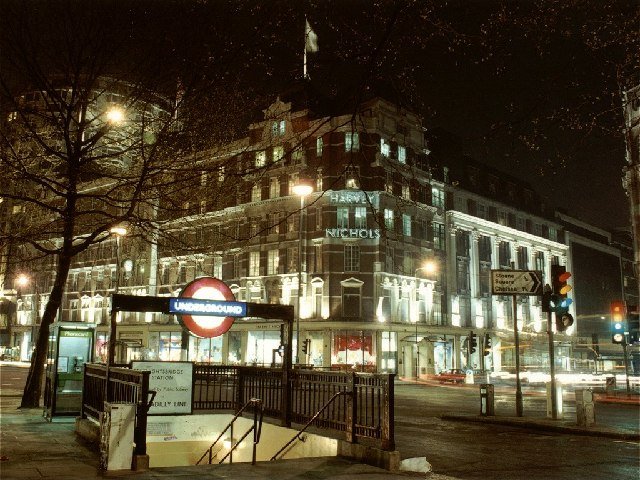
Frasers Group Takes Control of Harvey Nichols
Frasers Group, the retail company controlled by Mike Ashley, has acquired Harvey Nichols from administrators in a rescue deal that brings one of Britain’s best-known luxury retailers into the owner of Sports Direct’s expanding portfolio. The transaction was completed on 13 August 2026 after Harvey Nichols entered administration in June. Financial terms were not disclosed.
The acquisition covers six UK stores, including the recently refurbished Knightsbridge flagship, as well as locations in Manchester, Birmingham, Bristol, Leeds and Edinburgh. Frasers is also taking control of Harvey Nichols’ online business, existing inventory and more than 1,000 employees. The retailer’s international franchise agreements are included, although those stores will continue operating under their existing licensing arrangements.
A Luxury Department Store Under Financial Pressure
Harvey Nichols had warned that it could cease trading within a year without new investment, following sustained trading and operational difficulties. The business had struggled with the cost of maintaining a premium store network while consumer spending remained under pressure. Its administration created an urgent need to secure a buyer capable of preserving the brand while addressing its underlying financial problems.
The retailer’s difficulties were also visible in the condition of some of its stores. Retail analyst Catherine Shuttleworth said that parts of the estate appeared tired and had suffered from a lack of investment, arguing that luxury department stores need continuous spending to maintain their appeal. That challenge is particularly acute for a business selling premium fashion, beauty, food and lifestyle products, where the physical environment is part of the product itself.
Frasers Warns of Tough Choices and Restructuring
Michael Murray, Frasers Group’s chief executive, described Harvey Nichols as a British institution with significant potential. He also made clear that the turnaround would require meaningful change, including difficult decisions that could result in a smaller business in the short term. The new owner intends to review the store portfolio, organisational structure, operating model and cost base.
That language points to a restructuring rather than a simple change of ownership. Frasers will need to determine which locations can generate sustainable returns, how much investment each site requires and whether the existing operating model is appropriate for modern luxury retail. The company has not announced specific closures or job losses, but its comments indicate that Harvey Nichols’ current structure is unlikely to remain unchanged.
Harvey Nichols Joins Frasers’ Luxury Retail Strategy
The acquisition strengthens Frasers Group’s position in premium and luxury retail, alongside brands such as Flannels, House of Fraser, Jack Wills and Agent Provocateur. Frasers has also built relationships with major luxury labels through its wider fashion operation and recently increased its focus on the upper end of the market. Harvey Nichols gives the group a prestigious department-store platform and access to a portfolio carrying more than 800 premium and luxury brands.
The most obvious comparison is with Flannels, which Frasers has developed as a more fashion-led and aspirational retail concept. Analysts expect Harvey Nichols to move closer to that model than to the discount-oriented identity associated with Sports Direct. The challenge will be to refresh the customer experience without stripping away the distinctiveness that made Harvey Nichols valuable to luxury brands and shoppers.
Frasers may also be able to apply its scale in areas such as purchasing, technology, loyalty schemes, logistics and property management. However, luxury retail depends heavily on brand relationships, presentation and service, so cost savings cannot come at the expense of the experience. The group’s task is to create operational leverage while retaining the sense of exclusivity that supports premium pricing.
The Next Chapter for a British Retail Institution
The deal ends 35 years of ownership by Hong Kong businessman Sir Dickson Poon, who acquired Harvey Nichols in 1991. It also preserves the immediate future of a retailer with a heritage stretching back almost 200 years. More than 1,000 jobs transfer to the new ownership, although the long-term shape of the business remains subject to Frasers’ review.
The future of Harvey Nichols will depend on whether Frasers can turn cultural recognition into commercial performance. The OXO Tower restaurant in London is excluded from the transaction and is being sold separately, while discussions about the Dublin operation remain ongoing. For now, the UK stores will continue trading, but the rescue marks the beginning of a demanding reset rather than a return to business as usual.