CVAs as a platform for operational recovery
For many businesses facing financial pressure, a Company Voluntary Arrangement (CVA) is often viewed purely as a way to reduce debt or renegotiate lease commitments. In practice, the most successful CVAs achieve something much more valuable. They create the time needed for management to implement meaningful operational and strategic change.
Recent examples across the UK retail sector suggest that CVAs are becoming a more common feature of corporate restructuring once again. Rising costs, weaker consumer demand, higher financing costs and legacy liabilities continue to place pressure on otherwise viable businesses. For companies with a strong underlying proposition, a CVA can provide the breathing space needed to execute a turnaround while continuing to trade.
The businesses that emerge strongest from a CVA tend to share one characteristic. They treat the legal restructuring as the beginning of the recovery process, not its conclusion. Sustainable improvement comes from strengthening the business itself while using the flexibility that the CVA provides.
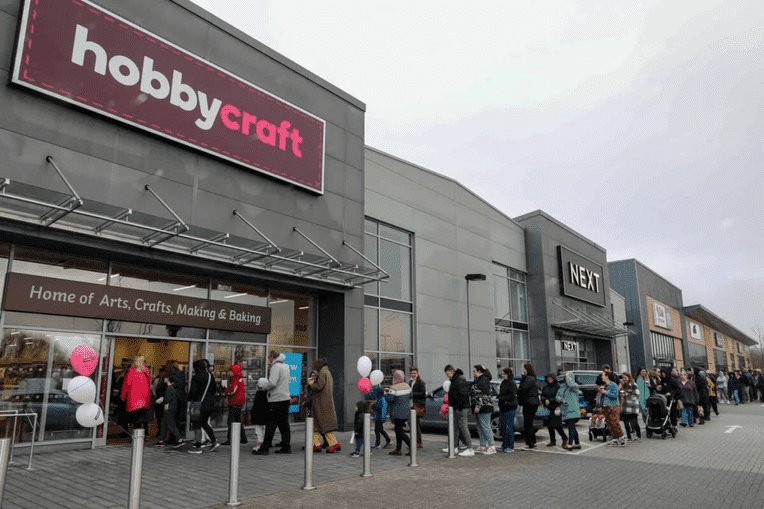
Hobbycraft: a clear example of a CVA used to enable transformation and early recovery
Hobbycraft provides a useful illustration of how a CVA can be used as part of a wider turnaround strategy rather than a standalone financial fix.
When the business entered its CVA process, it was facing the same structural pressures affecting much of the UK retail sector: rising property costs, changing consumer behaviour and increasing competition from online and discount channels. While the brand remained strong and customer demand for arts and crafts products was resilient, the store estate and cost base were no longer fully aligned with trading conditions.
The CVA allowed Hobbycraft to address this imbalance directly. Underperforming stores were identified for closure, lease terms were renegotiated where appropriate, and the overall property portfolio was reshaped to better reflect where demand was strongest. This was not simply about reducing costs in isolation, but about creating a more sustainable operating footprint.
Crucially, the CVA also gave management the time and financial flexibility to focus on the core business. Rather than being overwhelmed by legacy obligations, attention could shift towards improving product ranges, strengthening the customer proposition and investing in both in-store experience and digital capability.
This approach has delivered measurable results. In its most recent trading update in June, Hobbycraft confirmed that it had been able to exit its CVA early, ahead of schedule, following a significantly improved trading performance. The business reported a return to stronger like-for-like sales growth, improved profitability and better-than-expected cost savings from its restructured store estate. The combination of store optimisation, tighter cost control and renewed customer engagement meant the company was able to stabilise and strengthen its financial position more quickly than originally forecast.
The result is a more focused and operationally efficient business, with a store estate and cost structure better aligned to modern retail conditions. Hobbycraft demonstrates that when a CVA is used strategically, it can support genuine business transformation and even enable an accelerated recovery, rather than simply delaying decline.
A Company Voluntary Arrangement creates time to execute a turnaround
A Company Voluntary Arrangement allows an insolvent but viable business to reach an agreement with creditors to repay debts over an agreed period while remaining under the control of its existing directors. This gives management the opportunity to stabilise cash flow, address historic liabilities and focus on improving day-to-day performance.
The additional flexibility can be particularly valuable for retailers with large property portfolios or businesses carrying commitments that were sustainable under previous trading conditions but have since become a constraint on growth. Reducing these obligations allows management to redirect resources towards customers, operations and investment.
The legal process itself, however, does not improve a business. A CVA provides the opportunity to make better decisions. Success depends on how effectively that opportunity is used.
Operational improvement determines long term success
Businesses that complete successful turnarounds following a CVA typically make changes across multiple areas of the organisation. Store portfolios are reviewed, digital capability is strengthened, product ranges are refined and operational efficiency becomes a higher priority. These improvements work together to rebuild profitability over time.
Recent retail restructurings, including Hobbycraft, illustrate this approach well. Investment has focused on refreshing stores, improving customer experience, expanding online engagement and concentrating resources on product categories where consumer demand is growing. At the same time, underperforming locations have been closed while stronger sites have continued to receive investment.
This combination of financial restructuring and operational improvement gives creditors greater confidence that the business has a realistic path towards long term sustainability. The turnaround strategy becomes just as important as the restructuring itself.
A strong strategy gives creditors confidence
Every CVA requires creditor approval. Directors therefore need to demonstrate more than short term cash flow improvements. They must present a credible business plan that explains how the company will generate sustainable profits once the restructuring has been completed.
That strategy should identify the causes of financial distress, explain the operational changes being introduced and show how future performance will improve. Clear financial forecasts, realistic assumptions and disciplined execution all contribute to building confidence among creditors.
For directors, preparing this plan also creates an opportunity to reassess the business from first principles. Market conditions may have changed, customer expectations may have evolved and competitors may have adopted different operating models. A successful turnaround responds to those changes rather than relying on previous ways of working.
Is a Company Voluntary Arrangement the right restructuring option?
A CVA is not suitable for every business. It works best where the underlying company remains commercially viable but has become constrained by historic debt, lease obligations or temporary cash flow pressures. When the core business continues to attract customers and generate demand, restructuring can provide the platform for recovery.
Every situation requires careful assessment. Directors should evaluate cash flow, creditor support, operational performance and the wider strategic outlook before deciding whether a CVA is the appropriate restructuring route. Alternative insolvency or restructuring procedures may be more suitable where the underlying business is no longer viable.
For businesses with a realistic path to recovery, however, a Company Voluntary Arrangement remains one of the most effective restructuring tools available. It allows directors to preserve value, protect jobs where possible and focus management attention on building a stronger, more sustainable business for the future.
Further Reading
If you are considering whether a Company Voluntary Arrangement could help your business, these guides provide more detailed information:
- Company Voluntary Arrangement (CVA): https://www.k2-partners.com/advice-hub/company-voluntary-arrangement-cva
- CVA vs Administration: https://www.k2-partners.com/advice-hub/cva-vs-administration
- CVA Costs Explained: https://www.k2-partners.com/advice-hub/cva-cost
- Turnaround vs Alternatives: https://www.k2-partners.com/advice-hub/turnaround-vs-alternatives