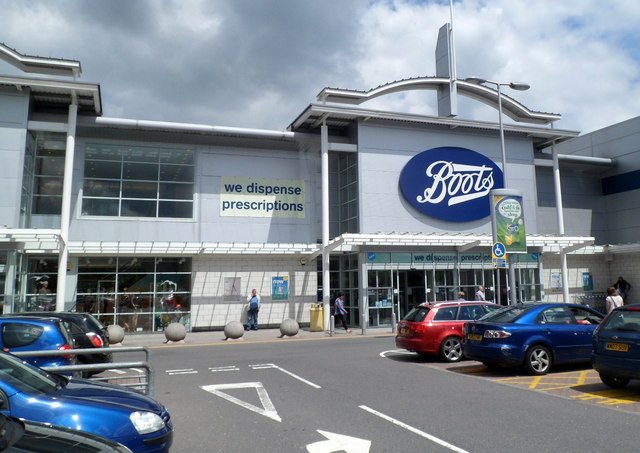
Boots Takeover: Inside the £6.7bn Weston Family Deal
Boots has agreed a takeover that could shift attention from who owns the business to how it serves its customers. Canada’s Weston family, through Wittington Investments, is buying the pharmacy and beauty retailer in a US$8.9bn deal, approximately £6.7bn, including assumed debt. Announced on 7 October 2026, the agreement remains subject to regulatory approvals and customary conditions, with completion expected in the first quarter of 2027.
The purchase covers Boots’ UK and Irish retail operations, Boots Opticians, No7 Beauty Company, and its Thailand and franchised businesses. Sycamore Partners and the Pessina family will retain the wider group’s interests in Mexico’s Farmacias Benavides and Germany’s Alliance Healthcare Deutschland. That distinction matters: this is an acquisition of Boots and specified associated businesses, rather than every operation currently held within The Boots Group.
Who Are Boots’ New Owners, Wittington and Fairfax?
The Weston family brings experience that extends well beyond financing retail acquisitions. Its Canadian business interests include grocery group Loblaw and pharmacy chain Shoppers Drug Mart, providing a relevant background for a retailer combining healthcare, beauty and everyday essentials. The family’s Canadian branch also previously owned Selfridges, making this a return to a prominent position on the British high street.
Wittington is partnering with Toronto-based Fairfax Financial Holdings rather than funding the acquisition alone. Fairfax expects to own 50% of Boots’ equity after completion and has committed to providing up to approximately US$2.3bn towards the purchase. Wittington will nevertheless have operational control, with Galen Weston becoming Boots’ chairman when the transaction closes.
The buyers’ stated emphasis is on stable, long-term ownership backed by further investment. That offers a different proposition from simply announcing another change at the top, although the practical results remain to be demonstrated. The meaningful test will be whether that commitment translates into consistently better stores, digital services and healthcare provision.
Why Boots Still Matters on the British High Street
Boots’ appeal rests partly on a history that few retail competitors can match. John Boot opened his first herbalist shop in Nottingham in 1849, offering affordable alternatives to traditional medicines. The business later expanded far beyond that original shop, while retaining healthcare as a central part of its identity.
Today, its combination of pharmacy services, beauty products and everyday purchases gives customers several reasons to visit. Boots has around 1,800 UK stores, despite hundreds of branch closures in recent years, and reported £7.5bn in sales in its latest annual results, up 3.2% on 2024. Those figures underline an important point: the buyers are acquiring a substantial trading business, not merely a famous name awaiting revival.
Boots Store Upgrades and Healthcare Expansion Plans
Wittington has identified store upgrades as one of its investment priorities. For shoppers, the value of that investment will depend on whether branches become easier and more pleasant to use, rather than simply looking different. Refurbishment could strengthen Boots’ appeal, but the announcement should not be mistaken for a published, branch-by-branch improvement timetable.
Improving the online experience is another stated priority. The opportunity is to make digital shopping and physical stores feel like complementary parts of the same service, rather than separate experiences. Customers will ultimately judge any changes by practical benefits such as convenience and ease of use, not the scale of the acquisition price.
Healthcare expansion could prove particularly important because it builds on an established reason for customers to trust Boots. Its existing services include vaccinations, eye tests and hearing tests, giving the business a role beyond selling products from shelves. Supporting further healthcare provision could make branches more useful destinations, although the acquisition announcement does not establish exactly which additional services each location might offer.
The Advantage Card also gives Boots an established connection with repeat customers. Launched in 1997, the loyalty scheme remains a recognisable part of the retailer’s identity and offers a potential foundation for strengthening customer relationships. However, opportunities to develop it should be distinguished from confirmed policy: the takeover announcement is not itself a promise of new rewards or revised benefits.
What the Boots Sale Means for Shoppers and Staff
An agreed takeover does not mean customers will encounter an immediately transformed Boots. Retail expert Catherine Shuttleworth has suggested that shoppers are unlikely to see much change in the coming months, with improvements more likely to emerge as investment progresses. The expected completion date in early 2027 also separates the announcement from the point at which the buyers formally take control.
For employees and communities, the future of individual branches will be a more immediate concern than the ownership structure. Boots has already reduced its store estate as shopping habits have changed and working from home has affected town and city-centre footfall. A commitment to invest is encouraging, but it should not be read as a guarantee that every existing location will remain unchanged.
The strongest case for this deal is the prospect of sustained attention to the business itself. Boots already has a familiar brand, an extensive physical presence and a combination of healthcare and beauty expertise that the buyers intend to develop. Whether the £6.7bn takeover succeeds will depend less on the ownership announcement than on the everyday experience customers receive afterwards.