A Legacy Retailer Confronts Strategic Reality
WH Smith has arrived at a point familiar to many long-established British companies. After years of adjustment, reorganisation, and incremental change, the business now operates with a far clearer sense of what it is built to do. The company has simplified its shape, reduced its scope, and concentrated its effort on areas where it has structural advantages.
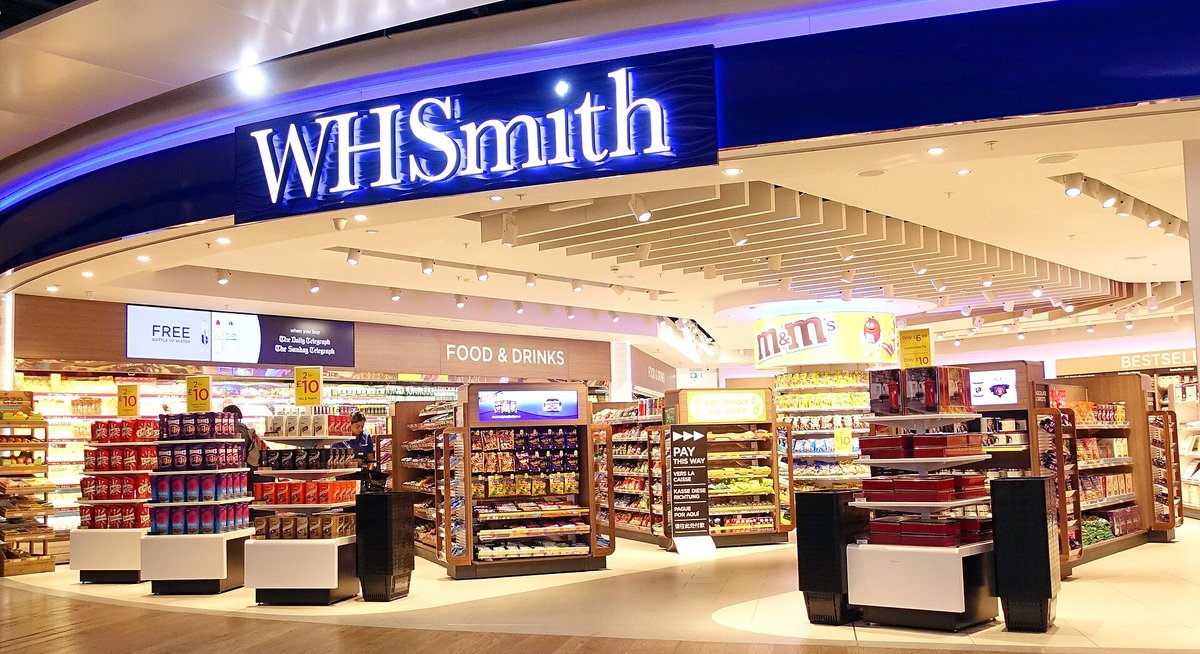
This shift has been formalised through the sale of the high street estate. Hundreds of town-centre stores that once defined the brand have been transferred to new ownership and now trade under a different name. What remains under the WH Smith banner are airport, rail station, and hospital outlets. These locations share a common feature: captive footfall, predictable demand patterns, and operating models that reward consistency.
The outcome is a business that is narrower but more coherent. Instead of managing a broad and often conflicting retail proposition, WH Smith now operates within a defined commercial environment. This change has reduced strategic ambiguity and placed execution, rather than reinvention, at the centre of management attention.
Travel Retail as an Operating System
Travel retail imposes its own form of discipline. Customers are time-constrained, assortments must be tightly curated, and margins depend on supply chain reliability rather than promotional theatre. These conditions favour retailers that are operationally sharp and procedurally consistent.
For WH Smith, this environment aligns with its strengths. The business has long experience in logistics, supplier relationships, and repeatable store formats. In transport hubs, those capabilities matter more than brand storytelling or seasonal reinvention. Performance is driven by availability, layout efficiency, and speed of service.
This focus also limits distraction. Travel locations leave little tolerance for legacy practices or diffuse management structures. Decisions are tested quickly by footfall data and unit economics. As a result, the organisation is encouraged to simplify internally, align incentives, and prioritise operational clarity across markets.
Leadership in a More Defined Business
The appointment of Leo Quinn as executive chairman comes at a moment when the most consequential strategic choices have already been made. His role is less about redefining the business and more about ensuring that the chosen model functions as intended. The emphasis is on execution, control, and sustained performance.
Quinn’s remuneration structure reinforces this orientation. A substantial personal investment in company shares and long-term equity awards tied to share price performance link leadership outcomes directly to shareholder returns. This approach reflects a broader expectation that management focus on value creation rather than expansion for its own sake.
The decision to combine executive and chair responsibilities also reflects the company’s current priorities. In a business that has narrowed its strategic scope, speed of decision-making and alignment between oversight and execution carry practical value. The test will be whether governance remains robust as operational intensity increases.
The Fragility of Strategic Clarity
History suggests that achieving focus is only part of the challenge. Maintaining it over time requires organisational discipline and a willingness to resist incremental drift. In retail, pressure to add complexity often returns through adjacent opportunities, international variation, or legacy systems that no longer fit the core model.
For WH Smith, the risk lies in allowing remnants of the previous corporate architecture to persist. Processes designed for a broad high street estate may dilute the advantages of a travel-led business. Simplification must extend beyond store numbers to decision rights, reporting lines, and performance measures.
The company now operates with a clearer answer to the question of what it is for. The more difficult task is remaining comfortable with that answer. In a sector where strategic clarity can erode quietly, sustained focus will depend less on ambition and more on restraint.