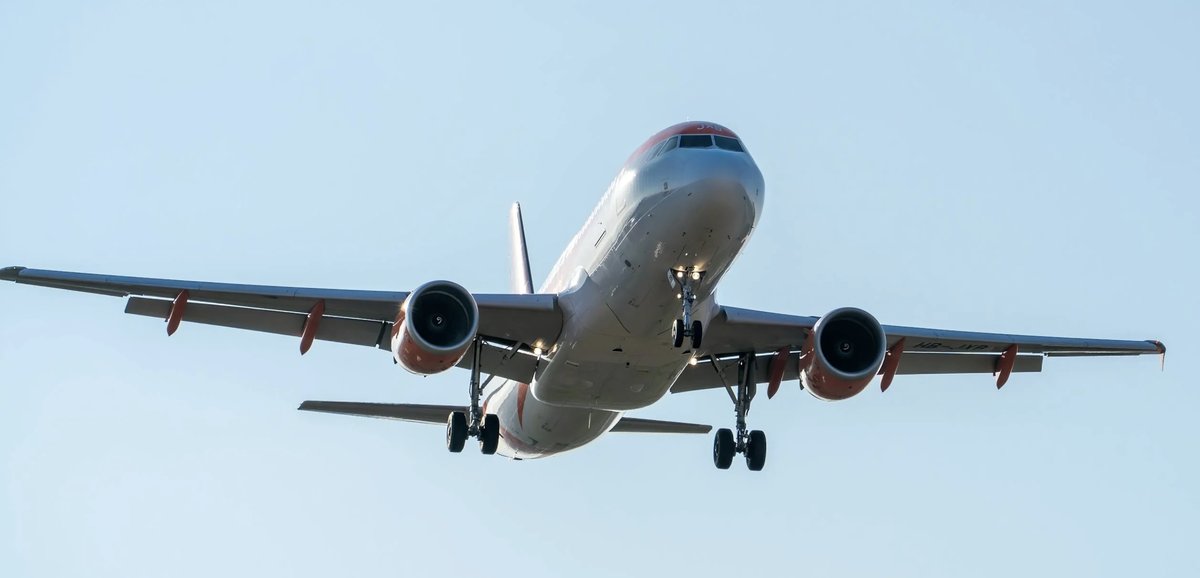
Hydrogen Aviation Dream Grounded as Court Appoints Liquidators
EcoJet Airlines, the ambitious Scottish start-up promising to revolutionize air travel with zero-emission flights, has ceased operations before ever carrying a single passenger. Edinburgh Sheriff Court appointed provisional liquidators Paul Dounis and Mark Harper of Opus Restructuring following a voluntary liquidation initiated by the company's board. The airline, which launched in May 2023 with bold claims of becoming the world's first electric airline, had been attempting to raise £20 million to fund certification activities and secure an Air Operator's Certificate from the UK Civil Aviation Authority.
The collapse marks a significant setback for Britain's ambitions in sustainable aviation. Opus Restructuring confirmed that EcoJet held no material assets at the time of liquidation, with shareholders agreeing to fund the winding-up process to ensure employees receive their full statutory entitlements. Originally founded in August 2021 as Fresh Airlines Limited by former airline pilot Brent Smith, the company had rebranded with environmental credentials at its core. The airline's workforce had already been decimated by redundancies, shrinking from 13 employees to just two by early 2025 as financial pressures mounted.
Dale Vince Withdraws Backing Citing Technology and Regulatory Hurdles
Dale Vince, the green industrialist and prominent Labour Party donor who founded renewable energy firm Ecotricity, confirmed he has "paused" investment into EcoJet, the airline's majority owner. Vince, who donated £5.5 million to Labour between 2022 and 2024, acknowledged that aviation remains the most challenging transport sector to decarbonize. "We remain committed to electrifying all forms of transport – aviation is the last frontier and the hardest," he stated, adding that aligning emerging propulsion technologies with regulatory frameworks was taking longer than anticipated.
Despite the setback, Vince maintained his long-term vision for zero-emission aviation. "This is a vital frontier in the move to net zero, green living, whatever you choose to call it – and it's absolutely doable. It's a matter of when not if," he insisted. The entrepreneur's decision to halt further funding proved decisive for EcoJet's fate, despite statutory accounts from August 2024 suggesting shareholder funding would continue for at least another year. In October 2024, Ecotricity had invested just over £1 million in exchange for 17,000 shares, demonstrating continued commitment mere months before the collapse.
Ambitious Plans for Hydrogen-Electric Fleet Never Materialized
EcoJet's business model centered on retrofitting conventional turboprop aircraft with hydrogen-electric powertrains supplied by ZeroAvia, a British-American developer of zero-emission aviation technology. The airline initially planned to operate 19-seater De Havilland Canada Twin Otter aircraft equipped with ZeroAvia's ZA600 hydrogen-electric engine, capable of routes up to 300 miles. Later plans shifted toward launching with ATR 72-600 aircraft before transitioning to hydrogen power, with the larger 70-seat models featuring ZA2000 engines designed for journeys up to 1,000 miles.
The airline's inaugural route was planned to connect Edinburgh with Southampton, with ambitions to expand across mainland Europe and eventually offer long-haul flights. EcoJet promised that its retrofitted aircraft would operate with the same power output as conventional planes but with 100% reduction in CO2 emissions, producing only water as a byproduct. The company claimed that repurposing existing aircraft rather than building new models would save 90,000 tonnes of carbon per year. Beyond the technology, EcoJet envisioned a comprehensively green operation, including plant-based meals, elimination of single-use plastics, and environmentally friendly staff uniforms.
Why Zero-Emission Aviation Remains Decades Away
The collapse of EcoJet highlights the formidable challenges facing hydrogen aviation, despite growing urgency around decarbonizing the sector. According to the International Energy Agency, aviation accounted for 2.5% of global energy-related CO2 emissions in 2023, with the sector growing faster than rail, road, or shipping between 2000 and 2019. While companies like ZeroAvia have successfully conducted test flights of hydrogen-powered aircraft, the journey from prototype to commercially certified passenger service remains a grueling marathon fraught with technological, regulatory, and infrastructure obstacles.
Certification timelines remain uncertain as aviation regulators grapple with safety frameworks for novel propulsion systems. Infrastructure presents perhaps the biggest hurdle—hydrogen aviation requires widespread fueling facilities at airports, an expensive undertaking that no airline will commit to without aircraft, and no manufacturer will scale up without guaranteed routes. Cost challenges compound these issues, as most hydrogen today derives from oil refining, and green hydrogen production at scale requires massive renewable energy capacity or potentially nuclear power. Industry experts caution that even with technological breakthroughs, widespread adoption of hydrogen aviation may be decades away rather than years.
Lessons from Britain's Failed Green Aviation Flagship
EcoJet's liquidation offers a sobering reality check for the sustainable aviation sector, demonstrating that environmental ambition alone cannot overcome the structural challenges of airline economics combined with immature technology. The company never operated a commercial flight, never acquired aircraft, and ultimately held no material assets when liquidators arrived. Yet for a brief period, it captured imaginations and shifted conversations within the aviation industry, proving there is commercial appetite for zero-emission solutions even if the technology isn't ready. The airline's leadership included experienced industry figures like CEO Brent Smith, a former Flybe captain, and chairman Peter Davies, former Air Malta chief executive, suggesting the failure stemmed from systemic challenges rather than management inexperience.
The cautionary tale extends beyond EcoJet, as even major manufacturers are scaling back hydrogen ambitions. Airbus recently postponed its ZEROe hydrogen aircraft program by five to ten years, citing slower-than-expected technological development. Meanwhile, Bristol-based Vertical Aerospace continues pursuing all-electric flying taxi certification by 2028, though these vehicles serve different markets than commercial airlines. For now, conventional jet fuel remains dominant, and EcoJet will be remembered not for what it achieved but for what it attempted—a pioneering effort that arrived too early for the technology and regulatory environment to support it.