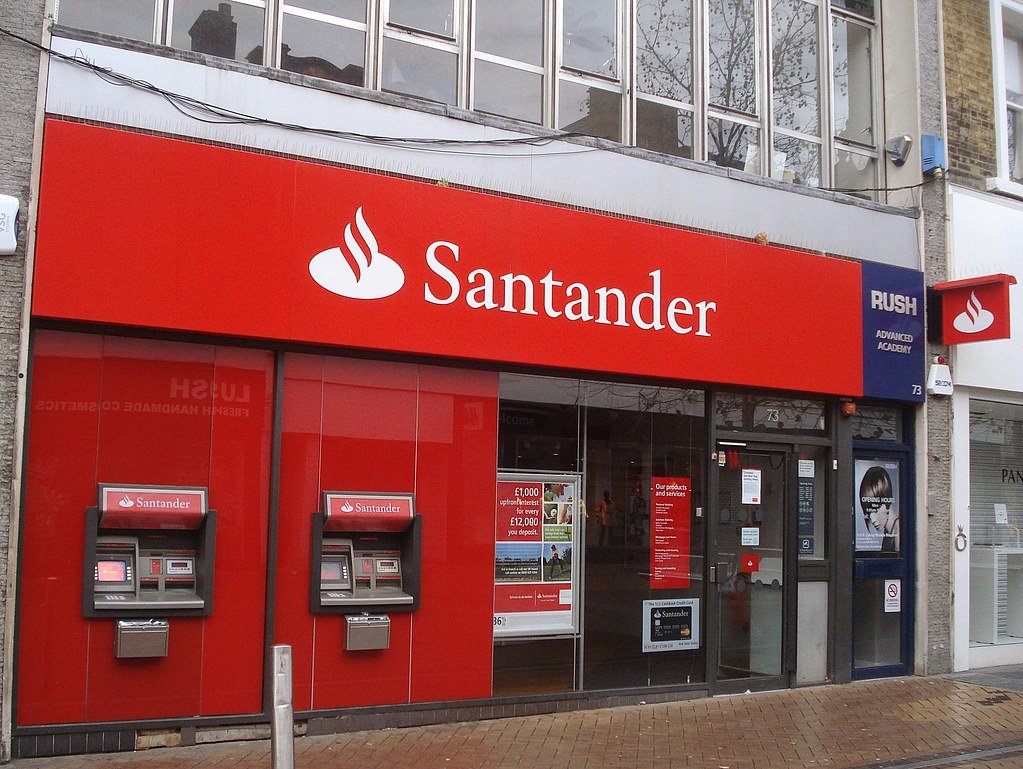
Spanish Banking Giant Accelerates High Street Retreat
Santander has announced plans to close 44 additional branches across the United Kingdom, placing 291 jobs at risk in the latest wave of high street banking consolidation. The Spanish-owned lender confirmed that 96% of customer transactions now occur through digital channels, driving the decision to reduce its physical footprint. This announcement follows last year's closure programme that affected 95 branches and 750 employees, demonstrating the accelerating pace of change in retail banking.
The closures will take place between late April 2026 and January 2027, reducing Santander's network from 349 to 305 locations nationwide. Following these changes, the bank will operate 244 full-service branches, 19 counter-free branches, 36 reduced-hour branches, six work cafés, and 111 Santander Locals in libraries and community centres. The bank has committed to investing tens of millions of pounds in refurbishing its remaining branches, with 80% of this modernisation work scheduled for completion by the end of 2026.
Affected Communities Face Limited Banking Access
The closure list spans the entire UK, from Liskeard in Cornwall to Glengormley in County Antrim, affecting both urban and rural communities. Towns such as Andover, Bridgwater, Macclesfield, and Stafford will lose their Santander branches in May 2026, whilst four locations—Leighton Buzzard, Ormskirk, Whitehaven, and Wilmslow—will see closures delayed until January 2027. The decision adds to growing concerns about "banking deserts," with some areas of Yorkshire already leaving residents without a bank branch within 10 miles.
Ministers have criticised the wave of bank closures, arguing they restrict access to cash for elderly and vulnerable populations who rely on face-to-face services. Santander has pledged that wherever a branch closes, community bankers will operate from nearby banking hubs or Santander Locals, providing weekly support to customers. However, the rollout of banking hubs—funded by major banks and operated by Post Office managers—has been slower than anticipated, with only 150 hubs currently operational across the UK.
Industry-Wide Transformation Reshapes British Banking
Santander's announcement reflects a broader transformation across the UK banking sector, where two-thirds of the branch network has disappeared over the past decade. Lloyds Banking Group is closing more than 100 branches by March 2026, whilst NatWest has shuttered 57 locations recently, bringing its total closures to nearly 1,400 over the last ten years. According to consumer group Which?, 6,561 bank branches have closed since January 2015, with Barclays leading individual closures at 1,236 branches.
The shift towards digital banking has been dramatic, with Santander reporting a 109% increase in mobile banking app transactions since 2019 and over 80% of current accounts now opened digitally. Other major banks report similar patterns—TSB confirmed that more than 90% of its transactions occur digitally, whilst Lloyds recorded 10 million fewer in-branch transactions in 2024 compared to the previous year. This technological transformation, accelerated by the coronavirus pandemic, has fundamentally altered how customers interact with their banks.
Banking Hubs Emerge as Alternative Solution
Banking hubs represent the industry's primary response to concerns about reduced access to cash and banking services. These shared facilities, owned by Cash Access UK and operated by Post Office managers, allow customers from multiple banks to conduct cash transactions Monday through Friday between 9am and 5pm. Each hub also features community bankers from different institutions rotating throughout the week, providing private consultations for complex banking matters. Cash Access UK recently opened its 150th hub, marking significant progress after opening 50 hubs in just four months.
The organisation has innovated hub locations, including the first banking hub inside a Co-op convenience store in Treorchy, South Wales. LINK, the UK's cash machine network, independently assesses communities following branch closures to determine whether banking hubs are needed, with 224 hubs and 149 deposit services currently recommended nationwide. Despite this progress, the pace of hub openings has not matched the speed of branch closures, leaving gaps in banking access across numerous communities.
Nationwide Bucks Closure Trend with Branch Commitment
Whilst most high street banks continue closing branches, Nationwide Building Society has pledged to keep all 696 of its branches open until at least 2030, extending its existing Branch Promise by two years. The UK's largest building society reported an 11% increase in branch usage over the 12 months to September 2025, with branch account openings rising 28% for current accounts and 31% for savings accounts year-on-year. Nationwide now operates as the last remaining bank in 133 UK towns and villages, with ATM usage in these locations increasing by 25% for Nationwide customers and 96% for non-customers.
The building society's data demonstrates continued demand for physical banking services, particularly in communities where Nationwide became the last branch in town during 2025, which saw current account openings surge by 29%. However, Nationwide did close 10 branches before making its 2023 pledge. The contrast between Nationwide's expansion and other banks' retrenchment highlights diverging strategies within the sector, as Santander simultaneously invests in digital services whilst maintaining a reduced but modernised branch network featuring innovative formats like work cafés and community banking locations.