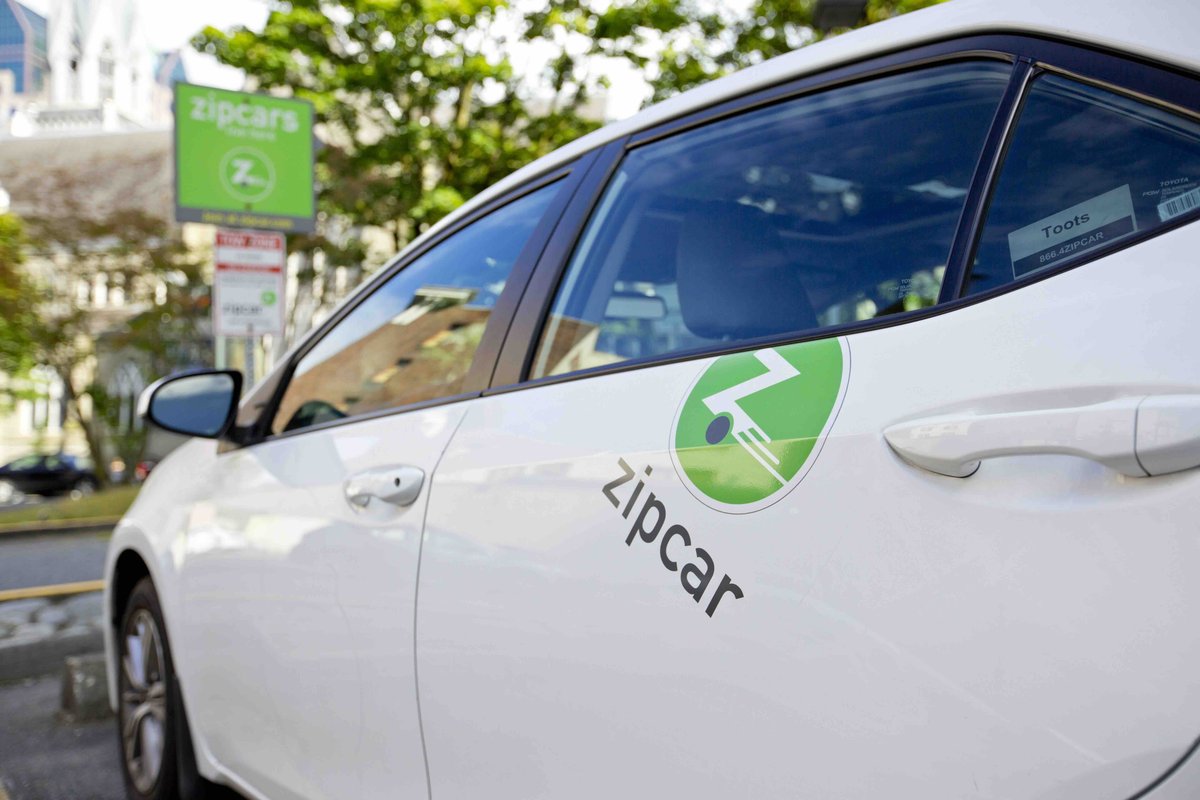
London's Largest Car-Sharing Service Announces Sudden UK Closure
Zipcar, the world's most prominent car-sharing platform, has dropped a bombshell on its 650,000 UK members by announcing plans to completely cease British operations by the year's end. The Avis Budget-owned company informed customers that all new bookings will be suspended after December 31st, with existing Christmas reservations remaining honored through the consultation period. The closure marks a dramatic retreat for a company that once pioneered flexible urban mobility across multiple UK cities, leaving London commuters scrambling for alternative transport solutions as the capital's congestion charge landscape undergoes significant changes.
The timing of Zipcar's withdrawal appears particularly consequential given London's expanding congestion charge zone set to include electric vehicles starting December 26th. With nearly 3,000 vehicles comprising the majority of the UK's 5,300-strong shared fleet, Zipcar's departure eliminates approximately 60% of available car-sharing capacity across Britain. James Taylor, Zipcar UK's general manager, has directed displaced members toward CoMoUK, a national shared transport charity, to explore remaining options, though alternatives appear limited given Zipcar's dominant market position.
The company's UK subsidiary reported devastating financial metrics in its latest accounts, posting an £11.7 million loss for 2024 against revenues that declined from £53 million to £47 million year-over-year. Rising energy costs for fueling and charging vehicles, combined with the cost-of-living crisis affecting customer demand, created unsustainable operating conditions. The 71-person UK workforce now faces formal redundancy consultations as Avis Budget evaluates the viability of maintaining operations in a market where profitability has remained persistently elusive despite two decades of attempting to establish car-sharing culture.
Financial Pressures and Policy Changes Drive Car-Sharing Collapse
Zipcar's financial deterioration accelerated throughout 2024 as membership revenue failed to offset escalating operational expenses tied to maintaining scattered vehicle fleets across London. The company's accounts specifically highlighted how membership fees covering fuel and charging costs became increasingly burdensome as energy prices surged, squeezing margins on an already low-margin business model. Avis Budget had previously signaled concerns by quietly downgrading Zipcar's subsidiary valuation earlier in the year, with declining revenues and rising costs in key markets prompting internal reassessment of the division's strategic value.
The incoming congestion charge modifications represent a particularly brutal policy shift for car-sharing operators, with industry estimates suggesting the changes would add approximately £1 million annually to Zipcar's UK cost structure alone. The up-to-£18 daily charge applies to any vehicles entering the expanded zone except those permanently stationed within, forcing operators to determine how much financial burden to transfer to already price-sensitive consumers. Mayor Sadiq Khan's office announced a 100% discount for electric car clubs with dedicated parking bays, but this concession appears insufficient to overcome the fundamental economics challenging fleet-based sharing models.
The UK's car-sharing infrastructure remains significantly underdeveloped compared to European counterparts, with just 0.7 shared vehicles per 10,000 residents versus 2.2 in Germany and 4.4 in Switzerland. Richard Dilks, chief executive of CoMoUK, characterized Zipcar's closure as symptomatic of broader policy failures to nurture shared mobility alternatives to private car ownership. His organization had documented 328,000 car club users across Britain in March, many of whom now face forced transitions back to private vehicle ownership, potentially undermining environmental goals tied to reducing per-household carbon emissions from vehicle production.
Pioneering Business Model Proves Unsustainable in UK Market
Zipcar revolutionized urban transportation through its flexible fleet model, eliminating fixed parking spaces and allowing London users to leave vehicles in residential bays throughout central zones accessible via mobile app. This approach differentiated the company from competitors operating dedicated bay systems, offering maximum convenience to members who could locate nearby vehicles dynamically rather than walking to specific stations. The technological infrastructure enabling hourly rentals through smartphone applications positioned Zipcar as a pandemic-era success story when temporary car needs surged among consumers avoiding public transit.
However, the operational realities of managing thousands of dispersed vehicles created maintenance nightmares that eroded profitability across the sector. Companies running proprietary fleets struggle with relatively high per-vehicle servicing costs compared to traditional rental operations where cars return to centralized locations for inspection and repair. Zipcar's previous closures in Oxford, Cambridge, and Bristol during 2024 reflected strategic contractions aimed at concentrating resources in the more densely populated London market, but even this focused approach failed to generate sustainable returns.
The car-sharing industry's broader challenges extend beyond Zipcar, with competitors like Enterprise Car Club and Share Now similarly grappling with profitability pressures despite growing environmental awareness around transportation choices. Peer-to-peer platforms such as Hiyacar, Turo, and Getaround offer alternative models by connecting private vehicle owners with renters, avoiding fleet ownership costs altogether, yet these platforms serve different use cases and cannot fully replace the convenience of professionally managed car clubs. Zipcar's retreat from the UK market raises fundamental questions about whether fleet-based sharing can ever achieve commercial viability without substantial policy support or subsidy structures.
Environmental Impact and Urban Planning Implications
The collapse of Britain's largest car-sharing service carries significant implications for urban sustainability strategies that positioned shared mobility as critical to reducing private car ownership and associated carbon emissions. Car-sharing models theoretically minimize environmental impact by eliminating redundant vehicle production for households that only occasionally need automotive transportation, allowing multiple users to access shared assets rather than manufacturing separate cars per family. Zipcar's closure potentially reverses years of progress in convincing Londoners to forgo private vehicle ownership in favor of on-demand access.
Transport for London's strategy explicitly recognized car clubs as important tools for achieving modal shift away from private car dependency, with Mayor Khan's office reiterating this commitment even as Zipcar announced its departure. The timing appears particularly unfortunate given London's simultaneous push to expand congestion charging as a demand management tool while theoretically supporting alternatives to ownership. Critics argue the policy creates contradictory incentives by making shared fleet operations economically unviable precisely when officials claim to prioritize reducing individual car ownership across the capital.
CoMoUK's warnings about car club viability have materialized dramatically with Zipcar's exit, potentially triggering cascading effects as displaced members return to private vehicle purchases or overwhelm remaining smaller operators. The organization estimates tens of thousands of former Zipcar users will now buy personal cars rather than continue with less convenient alternatives, potentially adding vehicles to London's congested streets rather than removing them. This outcome directly contradicts environmental objectives tied to transportation decarbonization and highlights the fragility of behavioral changes dependent on commercial services operating without substantial government support mechanisms.
Future of Shared Mobility After Zipcar's UK Departure
Zipcar will continue operating across 25 US states and three Canadian cities, suggesting the UK-specific challenges rather than fundamental business model failures drove the closure decision. The company's American operations apparently generate sufficient returns to justify ongoing investment, indicating that market-specific factors including policy environment, population density patterns, and cultural attitudes toward car ownership determine car-sharing viability. Britain's comparatively low shared vehicle penetration rates relative to continental Europe suggest cultural preferences and infrastructure gaps rather than technological or operational barriers represent the primary obstacles.
Remaining UK car-sharing providers face immediate pressure to absorb displaced Zipcar members while managing their own precarious economics in the post-closure landscape. Smaller operators lack Zipcar's scale advantages and technological sophistication, potentially struggling to deliver comparable user experiences that convinced hundreds of thousands to abandon private car ownership. The competitive dynamics may shift toward peer-to-peer platforms that avoid fleet ownership costs, though these services typically offer less reliable availability and standardized vehicle conditions compared to professionally managed car clubs.
The broader lesson from Zipcar's UK withdrawal centers on the gap between policy aspirations for reduced car ownership and the practical support mechanisms required to make commercial alternatives economically sustainable. Without deliberate interventions addressing the cost structures that undermined Zipcar—whether through subsidies, preferential parking access, or exemptions from congestion charges—shared mobility services will continue struggling to compete against private ownership despite environmental benefits. London's car-sharing ecosystem now enters an uncertain period where remaining providers must navigate the same challenging conditions that defeated the industry leader, with thousands of former Zipcar users seeking transportation solutions in a suddenly constrained market.