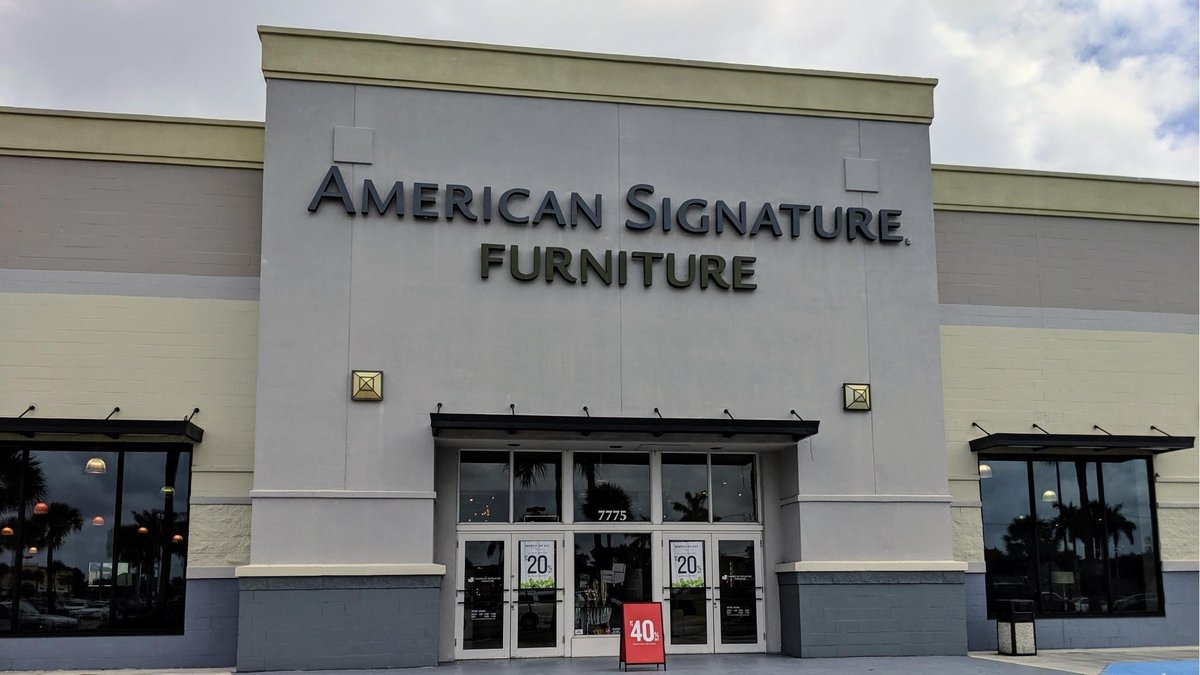
Court-Approved Bankruptcy Liquidation Marks End of Era for Iconic Furniture Retailer
The furniture retail landscape is witnessing a seismic shift as American Signature Inc. (ASI) begins liquidating its entire store network following bankruptcy court approval. A specialized joint venture comprising SB360 Capital Partners, Hilco Global, and Gordon Brothers received permission from the U.S. Bankruptcy Court for the District of Delaware to conduct Going Out of Business sales across all 89 remaining locations of Value City Furniture and American Signature Furniture. This development represents the final chapter for a furniture retail institution that has served American households for nearly 80 years, offering quality home furnishings at accessible price points to communities predominantly across the eastern United States.
The bankruptcy filing in November 2025 set in motion a series of events that furniture industry observers had been anticipating amid broader challenges facing brick-and-mortar home goods retailers. The Ohio-based company's decision to pursue Chapter 11 protection reflects the mounting pressures traditional furniture retailers face from e-commerce competition, changing consumer shopping habits, and operational costs associated with maintaining extensive physical store networks. Industry analysts point to similar closures across the home furnishings sector as evidence of a fundamental transformation in how Americans purchase furniture, with online marketplaces and direct-to-consumer brands capturing market share from established regional chains.
The timing of ASI's liquidation carries particular significance as it unfolds during what would typically be a strong selling period for furniture retailers. The company's nearly eight-decade presence in the market established brand recognition and customer loyalty across multiple generations, making this closure especially notable within retail industry circles. The liquidation process managed by the experienced joint venture signals that restructuring efforts proved insufficient to address the fundamental challenges facing the business model, ultimately leading to the decision to wind down operations entirely rather than attempt to emerge from bankruptcy as a reorganized entity.
Unprecedented Discounts Drive Final Sales Event Across Multi-State Footprint
Shoppers across 13 states now have access to liquidation pricing reaching up to 50% off original prices on comprehensive furniture collections and home décor items. The Going Out of Business sales encompass 79 Value City Furniture locations spread throughout the Midwest and Mid-Atlantic regions, alongside 10 American Signature stores concentrated in Delaware and Florida markets. This geographic distribution reflects the company's strategic focus on eastern U.S. markets where it established strong regional presence over decades of operation, building relationships with families furnishing apartments, first homes, and established residences alike.
The merchandise available through the liquidation represents the full spectrum of home furnishing categories that made these retailers destinations for budget-conscious shoppers seeking style without premium price tags. Living room collections featuring sofas, sectionals, recliners, and entertainment centers are marked down alongside complete dining room sets, bedroom furniture including mattresses, and complementary items such as rugs, lighting fixtures, and decorative accessories. According to SB360 President Aaron Miller, the combination of already-competitive pricing with substantial liquidation discounts creates exceptional value propositions for consumers, particularly those furnishing entire rooms or homes who can capitalize on coordinated collection purchases at unprecedented prices.
Five locations in Tennessee and North Carolina markets began offering closeout pricing earlier than the main liquidation event, with four American Signature stores in Nashville and one Value City Furniture location in Charlotte already in advanced stages of inventory clearance. These preliminary closures served as test cases for the broader liquidation strategy while allowing the joint venture to refine operational approaches before launching the company-wide sales event. Industry professionals familiar with retail liquidations emphasize that the deepest discounts typically emerge in final weeks as retailers prioritize complete inventory clearance over margin preservation, suggesting that shoppers who can wait may find even better deals, though at the risk of diminished selection.
Retail Liquidation Specialists Orchestrate Strategic Inventory Clearance
The joint venture managing ASI's liquidation brings specialized expertise in retail wind-downs, combining the capabilities of three firms with extensive experience navigating complex bankruptcy proceedings. SB360 Capital Partners, Hilco Global, and Gordon Brothers each contribute distinct competencies to the liquidation process, from valuation and marketing to operations and asset recovery. This collaborative approach represents industry best practices for maximizing recovery value while ensuring orderly store closures that serve remaining customer needs and protect employee interests during the transition period.
Retail liquidation has evolved into a sophisticated discipline requiring coordination across multiple operational dimensions simultaneously. The joint venture must balance competing priorities: clearing inventory quickly to minimize carrying costs while achieving sufficient prices to maximize creditor recovery, maintaining adequate staffing to serve customers while managing payroll expenses, and preserving brand reputation even as the business winds down. These specialists typically implement tiered pricing strategies that progressively deepen discounts based on inventory turnover rates and time remaining before final store closures, creating psychological urgency among shoppers while systematically clearing merchandise categories.
The bankruptcy court's approval process for liquidation sales involves careful review to ensure proposed discounting strategies serve creditor interests while complying with applicable state and local regulations governing going-out-of-business promotions. Courts evaluate whether the professional firms managing liquidations possess appropriate qualifications, whether proposed fee structures align with industry standards, and whether the overall approach represents a prudent strategy for maximizing estate value. The approval granted to the SB360-Hilco-Gordon Brothers joint venture indicates the court's confidence in their ability to execute an effective wind-down that balances stakeholder interests throughout the process.
Furniture Retail Industry Faces Continued Consolidation Pressure
American Signature Inc.'s closure exemplifies broader trends reshaping the furniture retail sector as traditional showroom-based business models struggle against evolving market dynamics. The rise of online furniture retailers offering convenient home delivery, augmented reality visualization tools, and generous return policies has fundamentally altered consumer expectations and shopping behaviors. Meanwhile, direct-to-consumer mattress brands disrupted a once-stable category by eliminating showroom overhead and middleman costs, applying business model innovations that have since expanded into broader furniture segments and pressured traditional retailers' pricing power.
Economic factors beyond competitive pressures have compounded challenges for furniture retailers with extensive real estate footprints. Commercial lease costs in desirable retail locations, warehouse expenses for inventory storage, and logistics costs for furniture delivery have all increased substantially in recent years. The furniture category's inherently low inventory turnover compared to other retail segments means that capital remains tied up in merchandise for extended periods, creating cash flow pressures particularly acute for retailers operating on thin margins. Additionally, furniture purchases represent discretionary spending that consumers readily defer during economic uncertainty, making the sector vulnerable to macroeconomic headwinds that trigger conservative household spending patterns.
Industry observers note that successful furniture retailers increasingly pursue omnichannel strategies integrating physical showrooms with robust e-commerce platforms and flexible fulfillment options. Survivors in the evolving landscape tend to differentiate through exclusive merchandise, superior customer service, design consultation capabilities, or hyper-local market focus rather than competing primarily on price in commodity categories. The ASI liquidation removes a significant player from the affordable furniture segment, potentially creating opportunities for remaining regional chains and national competitors to capture displaced market share, though whether traditional retailers or online-native brands ultimately benefit remains an open question with significant implications for the sector's future structure.
Strategic Considerations for Shoppers Navigating Liquidation Sales
Consumers considering purchases during the Value City and American Signature liquidation sales should approach the opportunity with informed strategies that maximize value while managing expectations appropriately. Liquidation events create genuine savings opportunities, particularly on big-ticket furniture items where percentage discounts translate to substantial absolute savings, but they also involve trade-offs that shoppers should evaluate carefully. Understanding the typical trajectory of liquidation pricing, return policy limitations, and inventory availability patterns enables more strategic decision-making throughout the sales process.
Early-stage liquidation shopping offers maximum selection across styles, sizes, and categories, allowing shoppers to find specific pieces matching their preferences and spatial requirements. However, initial discounts often represent moderate savings, with deeper price reductions emerging as retailers become increasingly motivated to clear remaining inventory. This creates a fundamental tension between selection breadth and discount depth that shoppers must navigate based on their priorities and flexibility. For shoppers with specific needs or limited timeline flexibility, early shopping despite smaller discounts may prove optimal, while those with patience and adaptable preferences might benefit from waiting for maximum markdown phases, accepting that preferred items may have sold previously.
Practical considerations beyond pricing deserve attention when purchasing from liquidating retailers. Return policies typically become more restrictive or eliminated entirely during liquidation sales, meaning shoppers assume greater risk on purchases that may not fit properly or meet expectations upon home delivery. Warranty coverage, delivery timelines, and post-sale customer service capabilities may be limited or unavailable as operations wind down, requiring buyers to evaluate furniture condition carefully before purchase and arrange prompt delivery when possible. For shoppers willing to accept these limitations in exchange for significant savings on quality merchandise, liquidation sales present compelling value, while those prioritizing purchase security and post-sale support might find better overall value through traditional retail channels despite higher upfront costs.