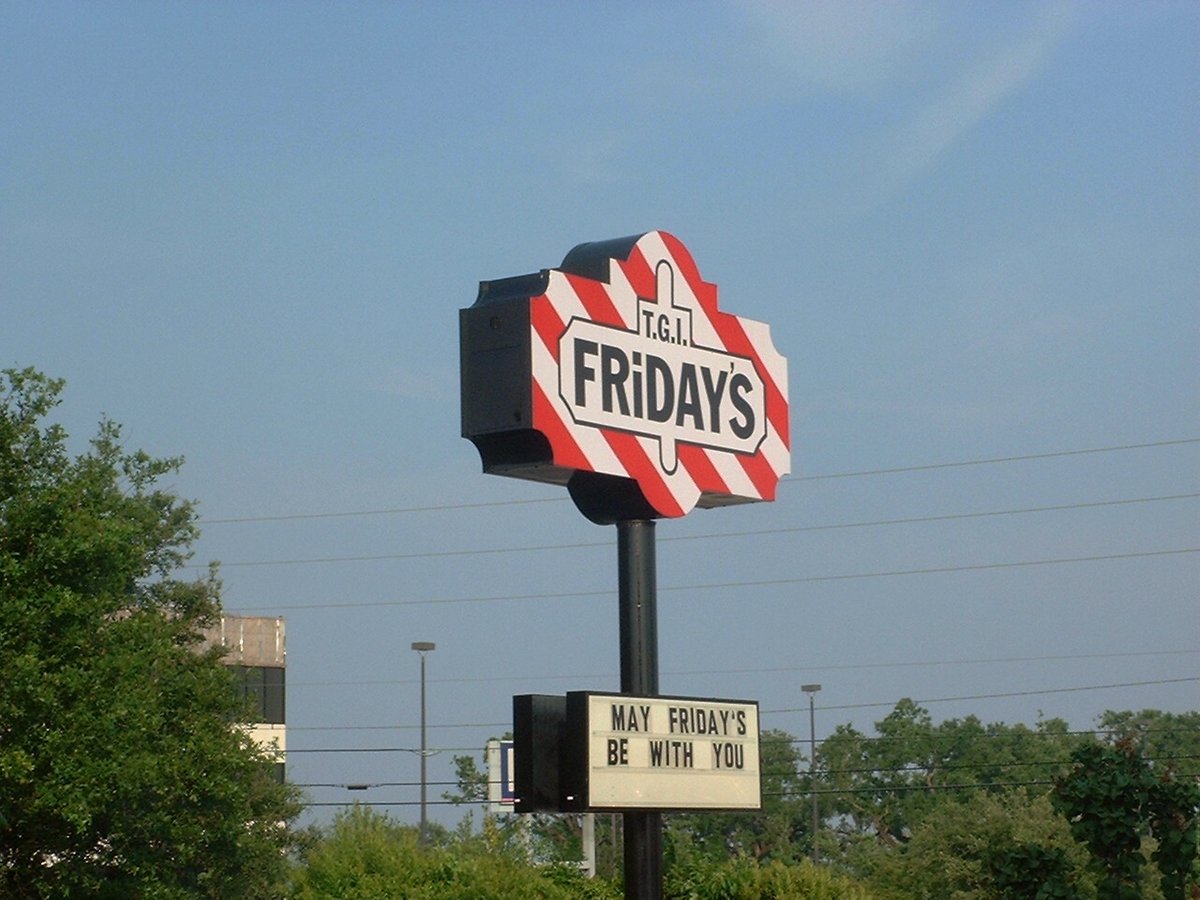
The iconic American casual dining chain TGI Fridays is reportedly preparing for its most significant UK restructuring yet, with insiders warning that up to 20 restaurants could permanently close their doors within days. The move comes as the company's latest owner finalizes a controversial pre-pack administration deal that threatens to leave hundreds of hospitality workers jobless. This marks the third major crisis for the beloved restaurant brand in just over a year, raising serious questions about the viability of casual dining chains in Britain's increasingly challenging hospitality landscape.
Liberty Bar and Restaurant Group, which operates TGI Fridays' UK portfolio through Sugarloaf TGIF Management, has filed multiple notices of intention to appoint administrators since December 2024. The company took control of the chain just two months ago in October, but already finds itself unable to sustain the full 49-restaurant estate. Industry experts suggest the rapid deterioration reflects both poor strategic planning and the brutal economic headwinds battering the hospitality sector, including rising employment costs and weakened consumer spending power.
The potential closure of between 15 and 20 locations would represent roughly one-third to two-fifths of TGI Fridays' remaining UK footprint, dealing a devastating blow to the brand's presence in British high streets and retail parks. With nearly 2,000 employees currently on the payroll, the redundancies could affect anywhere from 600 to 800 workers, depending on which sites are ultimately deemed unviable. While the company maintains that "no decisions have been made yet," the filing of administrator notices signals that time is running out for a less drastic solution.
Pre-Pack Administration: The Controversial Rescue Mechanism Reshaping British Hospitality
The restructuring strategy being pursued by TGI Fridays involves a pre-pack administration—a controversial insolvency mechanism that allows companies to arrange a sale of their viable assets before formal administration begins. In this scenario, Sugarloaf TGIF Management would effectively buy back a slimmed-down version of the business it already owns, shedding unprofitable locations and their associated liabilities. Interpath Advisory has been engaged to handle the administration process, with the transaction expected to complete as early as next week, though sources caution that timing remains fluid.
Pre-pack administrations have become increasingly common in the UK hospitality sector as a tool for rapid restructuring without the prolonged uncertainty of traditional insolvency proceedings. The mechanism allows buyers to cherry-pick profitable locations while leaving creditors, employees at closed sites, and landlords to absorb losses. Critics argue this approach prioritizes owners and investors over workers and suppliers, particularly when the same management team buys back the business they previously controlled. For TGI Fridays staff, the speed of a pre-pack means little warning before potential job losses materialize.
The choice of this restructuring route reflects the precarious financial position facing many casual dining operators in early 2026. Rising costs from national insurance contributions, minimum wage increases, and elevated business rates have compressed margins to unsustainable levels for underperforming locations. Rather than attempting a turnaround of struggling restaurants, operators are increasingly opting to excise weak performers through insolvency processes. This trend has accelerated dramatically since Chancellor Rachel Reeves' recent budgets imposed additional tax burdens on the hospitality industry, prompting sector-wide calls for government relief that have so far gone unanswered.
A Troubled History: TGI Fridays' Repeated Struggles in the UK Market
The current crisis represents the latest chapter in TGI Fridays' tumultuous recent history in the United Kingdom. The chain previously entered administration in 2024 under its then-owner Hostmore, a London-listed company whose collapse resulted in approximately 35 restaurant closures and roughly 1,000 redundancies. At that point, TGI Fridays operated close to 90 UK locations, making the 2024 administration one of the most significant hospitality failures of the year. Private equity firms Breal Capital and Calveton UK acquired the surviving restaurants for £9.55 million, promising stability and investment in the brand's future.
However, that ownership lasted less than a year before the business was sold again to Sugarloaf TGIF Management in October 2024, led by Ray Blanchette, the chain's former chief executive. The quick succession of ownership changes suggests underlying operational challenges that new investors have consistently underestimated. While sources indicated that performance had stabilized under Breal Capital and Calveton UK, the need for yet another rescue deal within months reveals that stabilization fell far short of genuine profitability. The pattern of repeated ownership turnovers and administrations has damaged employee morale, supplier confidence, and customer perception.
TGI Fridays first arrived in the UK in 1986 with a flagship Birmingham location—ironically among the restaurants that closed during the 2024 administration. The brand built its reputation on a party atmosphere, generous portions, and American-style casual dining that appealed to British families and celebration diners. Despite attempts to refresh the menu and revitalize restaurants in mid-2024, the chain has struggled to compete with changing consumer preferences toward healthier options, delivery-focused brands, and independent restaurants. The nostalgia factor that once drove traffic to TGI Fridays appears insufficient to overcome operational challenges and cost pressures in today's unforgiving market conditions.
Industry-Wide Pain: How Government Policy Is Crushing UK Hospitality Operators
TGI Fridays' potential collapse mirrors a broader crisis engulfing Britain's hospitality sector, with operators across the spectrum reporting unprecedented financial strain. Chancellor Rachel Reeves' 2024 and 2025 budgets have imposed particularly heavy burdens through increased employer national insurance contributions, elevated minimum wage requirements, and what industry leaders characterize as stealth taxes through business rates adjustments. UKHospitality, the sector's trade body, has warned that these measures could force widespread closures and job losses throughout 2026 unless the government provides targeted relief.
The national insurance increase—which raised employer contributions from 13.8% to 15% while lowering the threshold at which businesses begin paying—represents an especially acute challenge for labor-intensive hospitality businesses. For a chain like TGI Fridays with nearly 2,000 employees, the additional payroll costs amount to millions of pounds annually at a time when consumer spending remains subdued. Minimum wage increases, while beneficial for workers, further compress already-thin profit margins, particularly for casual dining chains competing on value propositions. The cumulative effect has transformed previously marginal locations into financial liabilities that cannot be sustained.
Hospitality leaders have pleaded with the government for sector-specific support, including business rates relief and VAT reductions, but their calls have largely been rebuffed. The Treasury maintains that the broader economy requires fiscal consolidation and that hospitality cannot be exempted from contributing. However, this stance overlooks the sector's unique vulnerability to discretionary spending reductions and its importance as a major employer, particularly for young workers and those in economically challenged regions. As more chains follow TGI Fridays into administration or restructuring, the human cost of this policy intransigence becomes increasingly apparent in communities across the country.
What's Next: Uncertain Future for Employees and the Casual Dining Sector
As TGI Fridays approaches its expected administration date, employees face an anxious wait to learn which locations will survive and whose jobs are safe. Workers at restaurants identified for closure may have as little as days' notice before redundancy, with limited prospects for comparable employment in their local areas amid wider hospitality sector contraction. Those fortunate enough to retain positions at surviving locations still face uncertainty about terms and conditions, as restructured businesses often seek concessions on pay, benefits, or working arrangements. The broader impact extends to suppliers, landlords, and the thousands of ancillary workers whose livelihoods depend on the restaurant trade.
The company's official statement that it is "still assessing all options" and that "locations continue to operate as usual" offers little comfort given the filing of administrator notices and insider reports of imminent closures. In insolvency proceedings, such carefully worded communications typically precede rather than prevent significant actions. The gap between public reassurances and private preparations reflects the legal and commercial constraints companies face during restructuring processes, but does little to address the human anxiety experienced by staff members monitoring news reports about their employer's viability.
For the casual dining sector more broadly, TGI Fridays' struggles signal continued consolidation and contraction throughout 2026. Chains operating 40-50 locations—large enough to carry significant overhead but too small for economies of scale—face particular vulnerability. Stronger operators may opportunistically acquire assets from distressed competitors, while weaker players risk following TGI Fridays into administration. The sector that expanded aggressively during the 2010s now faces a prolonged period of retrenchment, with only the most operationally efficient and financially resilient brands likely to emerge intact. For British high streets and retail parks, the loss of anchor restaurant tenants creates additional challenges for landlords and planning authorities already grappling with retail sector decline.