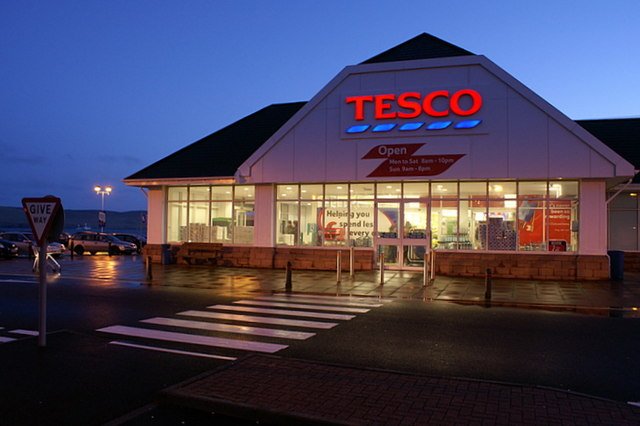
For much of the past three decades, Tesco pursued international expansion with the ambition of becoming one of the world’s leading global supermarket groups. Operations were established across Europe and Asia, providing access to new customers, diversified revenue streams and opportunities for long-term growth beyond the UK. Today, that strategy has been substantially reversed, with the company concentrating on the markets where it believes it holds the strongest competitive advantages.
Reports that Tesco is reviewing the future of its remaining Central European operations illustrate how far that transition has progressed. The businesses in Hungary, the Czech Republic and Slovakia generate several billion pounds of annual revenue and operate hundreds of stores. Even so, they represent a relatively small share of group profitability when compared with Tesco’s much larger UK and Ireland operations. For any listed business, the contribution of an asset is measured by the returns it generates as well as its scale.
The review reflects a broader principle of corporate strategy. Businesses periodically reassess whether every division continues to justify the capital, management attention and operational complexity required to support it. Markets evolve, competitive dynamics change and investment priorities shift. Assets that once strengthened a portfolio may eventually offer greater value under different ownership or after capital has been redirected elsewhere.
The Changing Economics of International Food Retail
Building a successful supermarket business across multiple countries has become increasingly demanding. Each market operates within its own regulatory framework, labour environment, consumer preferences and competitive landscape. Retailers must also manage different supply chains, property portfolios, tax regimes and pricing strategies while maintaining operational consistency across the wider group.
Central European grocery markets have become particularly competitive over recent years. Rising employment costs, persistent price competition and changing shopping habits have all influenced profitability. Consumer demand has gradually shifted towards convenience formats, while discount retailers have continued to gain market share. Larger hypermarkets that previously supported expansion strategies have become less important as purchasing behaviour has evolved.
These developments illustrate why international scale does not always translate into stronger financial performance. Geographic diversification can reduce dependence on a single market, although it also introduces additional complexity. When overseas businesses consistently generate lower returns than core operations, boards inevitably consider whether capital could deliver greater value if invested elsewhere.
Why Tesco Has Concentrated on Its Core Markets
Tesco’s strategic direction has steadily moved towards operational focus. Over the past decade the company has exited a series of international markets, simplifying the business and concentrating investment where it believes it can sustain stronger returns. The strategy reflects a preference for depth within core markets rather than maintaining a broad international footprint.
The UK and Ireland now sit firmly at the centre of Tesco’s investment programme. Loyalty initiatives, data capabilities, retail media, digital services, store improvements and supply chain efficiency all reinforce the company’s competitive position in markets where its brand recognition, customer relationships and operational scale remain strongest. Each investment supports areas that management can influence directly while building on established capabilities.
Competition within the domestic grocery sector also continues to shape strategic decisions. Discount chains have increased their market share over many years, while established competitors continue investing in pricing, customer experience and operational efficiency. Maintaining leadership requires continuous capital investment, making disciplined portfolio management an important component of long-term strategy.
What Tesco’s Strategy Reveals About Corporate Turnarounds
One of the most important decisions in corporate strategy concerns portfolio composition. Companies often devote considerable attention to acquiring businesses, entering new markets and pursuing growth opportunities. The same discipline should be applied when evaluating which assets continue to support long-term objectives.
Successful turnarounds frequently involve a careful review of where capital generates the highest return. Businesses with limited strategic fit, weaker profitability or lower future potential can reduce overall performance even when they remain sizeable operations. Divestments allow management teams to simplify organisations, strengthen balance sheets and concentrate resources where they can have the greatest impact.
Tesco’s evolution illustrates this principle clearly. The business that once sought international scale has progressively focused on operational excellence within a smaller geographic footprint. Whether or not further disposals proceed, the broader strategic lesson remains consistent. Sustainable value is created through disciplined capital allocation, clear strategic priorities and continued investment in markets where competitive advantages can be maintained over the long term.