Once-Pioneering Grocery Tech Giant Faces Harsh Reality Check
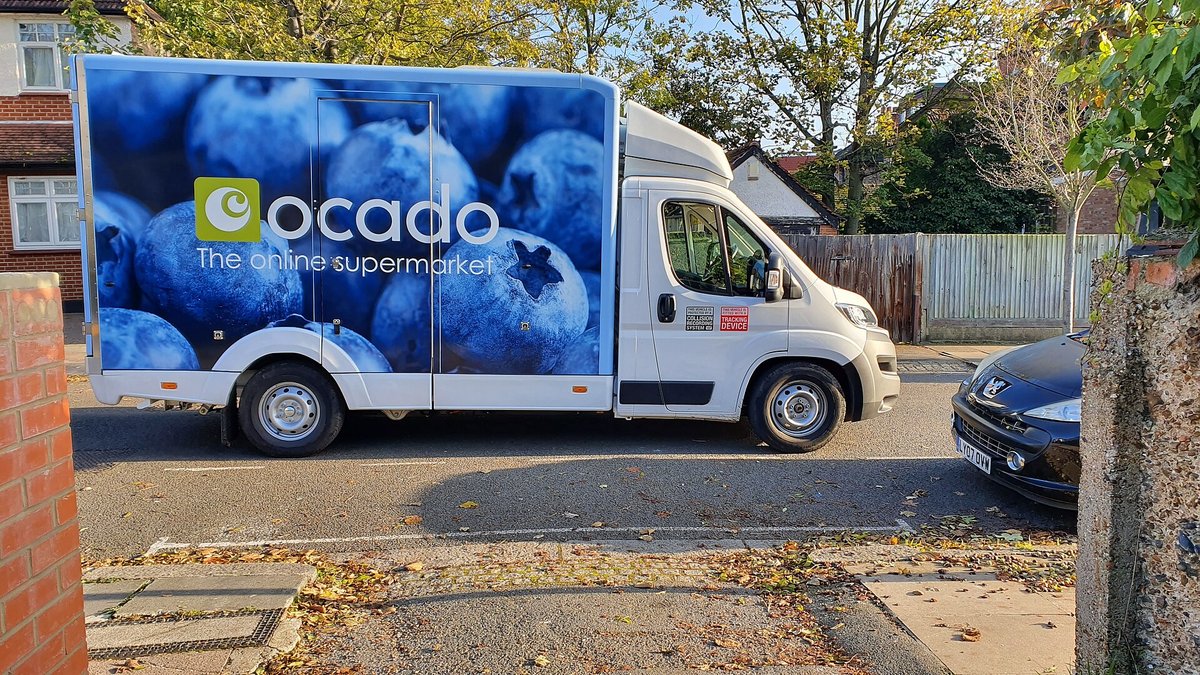
Ocado Group has announced plans to cut approximately 1,000 jobs—roughly 5% of its global workforce—over the coming year as part of a major restructuring aimed at reducing costs by £150m. The technology and online grocery group, which employs around 20,000 people worldwide, will see about two-thirds of these job losses concentrated in the UK, with the majority affecting its headquarters in Hatfield, Hertfordshire. Chief Executive Tim Steiner acknowledged that "a significant number of roles will no longer be required" as the company scales back its operations. The cuts are expected to primarily impact technology and support teams, with approximately half of the affected positions in tech roles.
The announcement came alongside Ocado's full-year results, which painted a challenging picture for the company. Group revenues rose 12% to £1.36bn for the year ending 30 November, but pre-tax losses at continuing operations widened significantly to £377.6m, compared with £339.8m the previous year. This marks the second round of major job cuts in just over a year, following the elimination of 500 technology roles in 2025, when the company cited increased use of artificial intelligence in research and engineering. The latest restructuring will merge Ocado Solutions and Ocado Intelligent Automation into a single division whilst scaling back research and development activities.
Market analysts have suggested that Ocado has lost the competitive edge it once held as a pioneer in the grocery delivery sector. Chris Beauchamp, chief market analyst at IG, noted that "for a company once seen as the future of supermarket delivery, its fate has been overtaken by its more pedestrian, but larger, rivals." Ocado shares plummeted more than 10% following the announcement, extending a decline that has seen the stock lose more than a third of its value over the past year. The company's market position has been significantly weakened by a series of setbacks that have called into question the viability of its business model in international markets.
North American Partners Pull Plug on Robotic Warehouses
The job cuts come against a backdrop of significant challenges in Ocado's North American operations, where both of its major partners have announced warehouse closures. US grocery chain Kroger decided to shut three Ocado-run warehouses after demand failed to meet expectations, a decision that knocked nearly a fifth off the UK company's market value when announced. Just months later, Canadian chain Sobeys confirmed it would close its Ocado-powered facility in Calgary, citing the Alberta grocery e-commerce market's size and slower-than-anticipated expansion rate. These closures represent a substantial blow to Ocado's strategy of licensing its proprietary software and robotics technology to international supermarket chains.
While Ocado remains well-known in the UK as an online grocer through its joint venture with Marks & Spencer, much of its business model relies on providing the Ocado Smart Platform—its proprietary software and robotics system—to other companies running delivery operations. The company currently operates 30 sites around the world, but the recent partner withdrawals have raised serious questions about the scalability and profitability of this approach. The North American setbacks suggest that Ocado's technology may not translate as effectively to different market conditions as the company had hoped, particularly in regions where traditional supermarkets have already established strong delivery capabilities.
Hatfield Community Braces for Economic Impact
The concentration of job losses in Hatfield has prompted concern from local representatives about the impact on the community. Andrew Lewin, Labour MP for Hatfield, described the announcement as "a serious setback," noting that "Hatfield has been Ocado's HQ for many years and people from our community have been integral to the growth and success of the business." He emphasized that the decision to cut hundreds of local jobs "will hit hard," leaving staff facing uncertainty about their futures. The town has become closely associated with Ocado's operations, and the job losses represent a significant proportion of local employment in the technology sector.
Steiner acknowledged the human cost of the restructuring, stating: "We are grateful to colleagues who are affected by these changes, and whose talent and hard work have made a lasting contribution to Ocado. We will support those impacted through this process." However, the scale of the cuts—coming so soon after the previous round of redundancies—has raised questions about the company's long-term commitment to maintaining a substantial UK workforce. The restructuring reflects what Steiner described as "the lower structural cost base that we have signalled over recent years," suggesting that further adjustments may be necessary if the company's financial performance does not improve.
AI Efficiency Gains Cannot Offset Fundamental Business Challenges
Ocado has cited artificial intelligence efficiencies and cost discipline as key factors enabling the workforce reduction, building on the AI-driven cuts announced just a year earlier. The company plans to achieve the £150m in savings through scaling back research and development activities, alongside leveraging AI to reduce the need for human workers in technology and support functions. This approach reflects a broader trend across the tech industry, where companies are increasingly turning to automation and AI to reduce operational costs. However, critics argue that while AI may help Ocado operate more efficiently, it cannot solve the fundamental challenges facing the company's business model.
The restructuring comes at a time when traditional supermarkets have significantly improved their own delivery capabilities, often using simpler and less capital-intensive approaches than Ocado's highly automated warehouses. These competitors have proven able to meet customer demand without the massive upfront investment required for Ocado's robotic systems, raising questions about whether the company's technology-first approach offers sufficient advantages to justify its costs. The widening losses despite revenue growth suggest that Ocado is struggling to achieve the economies of scale necessary to make its model profitable, particularly as it faces increased competition and partner withdrawals in key markets.
Restructuring Signals Strategic Pivot for Struggling Tech Retailer
The merger of Ocado Solutions and Ocado Intelligent Automation into a single division represents more than just an administrative change—it signals a fundamental reassessment of the company's strategic direction. By consolidating these operations, Ocado appears to be streamlining its focus and reducing the complexity of its organizational structure. This move, combined with the scaling back of R&D activities, suggests the company is shifting from an aggressive growth and innovation strategy to one focused on operational efficiency and profitability. The changes reflect the reality that Ocado can no longer afford to invest heavily in developing new technologies whilst simultaneously managing widening losses.
The company's UK retail arm, operated as a joint venture with Marks & Spencer, reports separately from the technology business and has not been directly affected by these cuts. However, the overall health of Ocado's technology division has implications for the entire group, as the retail operation relies on the same underlying platform and infrastructure. The question now facing investors and industry observers is whether these cost-cutting measures will be sufficient to return Ocado to profitability, or whether more fundamental changes to the business model will be required. With shares continuing to decline and major partners closing warehouses, the company faces an uncertain future as it attempts to prove that its once-revolutionary approach to grocery delivery can still compete in an increasingly crowded market.