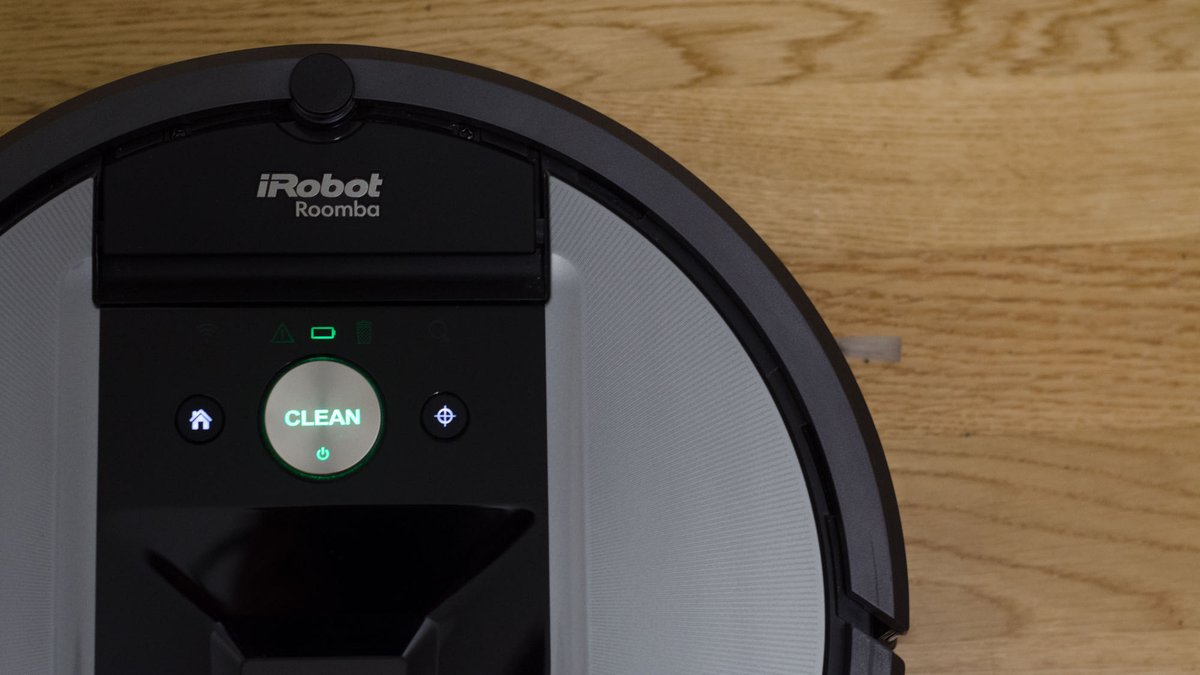
The American robotics dream just took a brutal hit. iRobot, the Massachusetts-based innovator that turned the Roomba into a household name, has filed for Chapter 11 bankruptcy and agreed to be acquired by its Chinese supplier, Shenzhen PICEA Robotics. The collapse of this 35-year-old company represents more than just another corporate casualty—it's a cautionary tale about how quickly market dominance can evaporate when regulatory roadblocks, supply chain pressures, and aggressive foreign competition converge. For an industry pioneer that once sold over 50 million robots worldwide and reached a pandemic-era valuation exceeding $3 billion, the descent into insolvency marks a stunning reversal of fortune that has sent shockwaves through America's innovation economy.
The Amazon Deal That Never Was: How Regulatory Intervention Sealed iRobot's Fate
When Amazon announced its intention to acquire iRobot for $1.7 billion in 2022, it appeared to be a lifeline for the struggling robotics company. The deal would have ranked as Amazon's fourth-largest acquisition at the time, positioning the Roomba maker within the tech giant's sprawling smart home ecosystem alongside Alexa speakers and Ring doorbells. Longtime CEO Colin Angle, who co-founded the company fresh out of MIT in 1990, framed the transaction as an opportunity to continue the company's mission with greater resources and scale. The narrative was compelling: a scrappy robotics startup that had pioneered consumer robotics would finally have the backing to compete against an increasingly crowded field of global competitors.
European regulators, however, had different plans. Concerned that Amazon could leverage its dominant marketplace position to disadvantage competing robot vacuum brands, EU competition authorities threatened to block the acquisition. Privacy advocates also raised alarms about Amazon gaining access to detailed floor plans of users' homes through the Roomba's advanced mapping technology. Faced with insurmountable regulatory opposition, both companies agreed to terminate the deal in January 2024, with Amazon paying a $94 million breakup fee before walking away. The regulatory intervention that was designed to protect competition may have instead ensured iRobot's demise, removing what Angle later called "the most viable path for a pioneering American robotics company to scale and compete globally."
The immediate aftermath was devastating. iRobot's stock price nosedived following the deal's collapse, erasing billions in shareholder value. Angle resigned from the CEO position he'd held since the company's inception, and iRobot was forced to eliminate 31% of its workforce in a desperate bid to cut costs. While the $94 million breakup fee provided temporary breathing room, much of it went toward advisory fees and repaying portions of a $200 million loan from private equity firm Carlyle Group. The failed Amazon acquisition didn't just cost iRobot a buyer—it eliminated the strategic pathway that could have insulated the company from the competitive and financial pressures that would ultimately prove fatal.
Death by a Thousand Cuts: Supply Chain Chaos and Chinese Competition
iRobot's financial troubles predated the Amazon deal drama, with earnings declining steadily since 2021 as multiple headwinds converged simultaneously. The COVID-19 pandemic initially boosted demand for home cleaning products, briefly pushing the company's valuation above $3 billion. But that surge proved temporary, as supply chain disruptions wreaked havoc on production timelines and component availability. Manufacturing delays frustrated customers and created inventory bottlenecks that left iRobot struggling to fulfill orders during peak demand periods. The company, which relied heavily on contract manufacturing in Vietnam and China, found itself particularly vulnerable to the global logistics meltdown that paralyzed industries worldwide.
More damaging than supply chain issues, however, was the flood of Chinese competitors entering the robot vacuum market with aggressive pricing strategies. Companies leveraging China's manufacturing infrastructure began producing robot vacuums at price points iRobot simply couldn't match while maintaining its premium positioning and R&D investments. The competitive landscape transformed rapidly, with iRobot's market share eroding as consumers increasingly opted for cheaper alternatives that offered similar functionality. This pricing pressure forced iRobot into a no-win situation: either slash prices and sacrifice margins, or maintain premium pricing and watch sales volume collapse. Recent tariff policies added further strain, with the company reporting that 46% US import duties on goods from Vietnam increased costs by $23 million this year alone.
The financial death spiral accelerated through 2023 and 2024. Despite Carlyle Group's $200 million lifeline in 2023, which was intended to stabilize operations and provide runway for a turnaround strategy, the fundamental business challenges proved insurmountable. The private equity firm ultimately sold that loan last month—presumably at a significant discount—effectively abandoning its investment before the bankruptcy filing. By the time iRobot sought Chapter 11 protection, the once-dominant robotics company had plummeted to a market valuation of approximately $140 million, representing a staggering 95% decline from its pandemic peak. The company posted a net loss of $145.5 million last year, with no clear path to profitability as operational losses mounted quarter after quarter.
From Defense Contracts to Consumer Darling: The Rise and Peak of Roomba
iRobot's origin story reads like a quintessential American innovation narrative. Founded in 1990 by MIT roboticist Rodney Brooks—the founding director of MIT's Computer Science and Artificial Intelligence Lab—along with his former students Colin Angle and Helen Greiner, the company emerged from cutting-edge academic research into practical robotics applications. Brooks had spent the 1980s studying insect behavior and developing theories about how simple systems could produce surprisingly complex behaviors, insights that would prove foundational to iRobot's approach to autonomous navigation. The company initially focused on defense and space technology, developing robots for military and research applications before pivoting to the consumer market.
The launch of the Roomba in 2002 represented a watershed moment not just for iRobot, but for consumer robotics as a category. The circular vacuum became the rare gadget that transcended its product category to achieve cultural ubiquity—it became a verb, spawned countless internet memes, and earned a peculiar reputation as an impromptu cat-transportation device. The Roomba's success stemmed from making sophisticated autonomous navigation technology accessible and affordable for everyday consumers, solving a genuine pain point while delivering consistent performance. By 2005, the company was successful enough to go public in an IPO that raised $103.2 million, following $38 million in venture funding from investors including Carlyle Group. The public offering validated the massive consumer appetite for robotic home solutions.
iRobot's peak confidence came around 2015, when the company was flush enough to launch its own venture capital arm with plans to invest $100,000 to $2 million annually in up to ten seed and Series A robotics startups. This move signaled iRobot's arrival as an established industry leader with the resources to shape the next generation of robotics innovation. At the time, tech media outlets noted that "robot domination may have just taken another step forward"—a sentiment that now reads as darkly ironic given the company's current circumstances. Throughout the 2010s, iRobot continued iterating on the Roomba platform, adding sophisticated mapping features, app-based controls, voice command integration, and increasingly intelligent cleaning patterns that distinguished its premium products from cheaper knockoffs flooding the market.
What Customers Face Now: Uncertainty Behind the "Business as usual" Messaging
iRobot's bankruptcy announcement came wrapped in carefully crafted reassurances designed to prevent customer panic. Company spokeswoman Michèle Szynal emphasized that "today's news has no impact on our business operations or our ability to serve our customers," insisting that the restructuring would allow iRobot to "remain as a going concern and continue operating in the ordinary course." The official statements promised no anticipated disruption to app functionality, customer programs, global partnerships, supply chain relationships, or ongoing product support. iRobot committed to meeting employee obligations and making timely payments to vendors and creditors throughout the court-supervised process, painting a picture of stability despite the dramatic ownership change to Shenzhen PICEA Robotics.
The reality behind these reassurances is considerably murkier. While the physical hardware will continue functioning—users can still press buttons to initiate cleaning cycles or send their Roomba back to its charging dock—the smart features that define modern robot vacuums depend entirely on cloud infrastructure and ongoing software support. App-based scheduling, room-specific cleaning commands, integration with voice assistants like Alexa, and over-the-air firmware updates all require backend services that could be vulnerable during the ownership transition. The bankruptcy filing's legal disclosures acknowledge inherent uncertainties about whether suppliers will maintain relationships, whether the restructuring proceeds as planned, and ultimately whether the reorganized company remains viable long-term under Chinese ownership.
Consumer concerns extend beyond immediate functionality to broader questions about data privacy and long-term product support. The acquisition by a Chinese manufacturer has reignited surveillance anxieties that first surfaced during the Amazon acquisition discussions, particularly regarding the detailed floor plans that Roomba's mapping technology collects from users' homes. Additionally, existing Roomba owners face uncertainty about how long their devices will receive software updates, security patches, and technical support under the new ownership structure. While PICEA Robotics promises to combine its manufacturing expertise with iRobot's consumer-focused design and R&D capabilities, the track record of similar restructurings suggests that legacy product lines often receive diminishing support as new owners prioritize their own strategic directions. For millions of Roomba owners worldwide, the bankruptcy represents a transition from an established American brand to an uncertain future under foreign control.
The Broader Implications: American Innovation Meets Global Competition Reality
Colin Angle's post-bankruptcy statement didn't mince words about the broader implications of iRobot's collapse. "This is nothing short of a tragedy for consumers, the robotics industry, and America's innovation economy," the longtime CEO declared, arguing that regulatory opposition to the Amazon acquisition "removed the most viable path for a pioneering American robotics company to scale and compete globally." His frustration captures a genuine dilemma facing American tech companies: how to maintain competitiveness against aggressive foreign rivals while navigating regulatory frameworks designed for different competitive landscapes. The iRobot case study suggests that well-intentioned antitrust enforcement can produce unintended consequences when it prevents strategic consolidations that might enable domestic companies to compete more effectively against international players operating under different rules.
The robotics industry is taking notice. iRobot helped create the consumer robotics category, selling over 50 million units and pioneering technologies that competitors worldwide have since adopted and refined. The company's failure sends a chilling message about the sustainability of American hardware manufacturing companies in an era of Chinese production dominance and aggressive pricing competition. While Silicon Valley has thrived by focusing on software and services with high margins and global scalability, hardware companies face much tougher economics—they require significant capital investment, deal with complex supply chains, operate on thinner margins, and compete directly with manufacturers who control production costs. iRobot's trajectory from MIT spinoff to household name to Chinese-owned restructuring demonstrates how quickly competitive advantages can evaporate in the hardware sector.
The takeover by PICEA Robotics also highlights the increasing dependence of American consumer tech brands on Asian manufacturing partners. PICEA, which operates research, development, and production facilities across China and Vietnam with over 7,000 employees, has sold more than 20 million robotic vacuum cleaners globally. The company transitioned from being iRobot's supplier to its creditor and ultimately its owner—a pattern that may become more common as American brands struggle with profitability while their manufacturing partners accumulate capital and capabilities. For policymakers concerned about American competitiveness in advanced manufacturing and robotics, the iRobot bankruptcy offers a sobering case study in how regulatory decisions, trade policies, and competitive dynamics interact to determine which companies survive and which nations dominate emerging technology sectors. Whether the restructured iRobot can maintain its innovation edge under new ownership remains an open question with significant implications for the future of American consumer robotics.