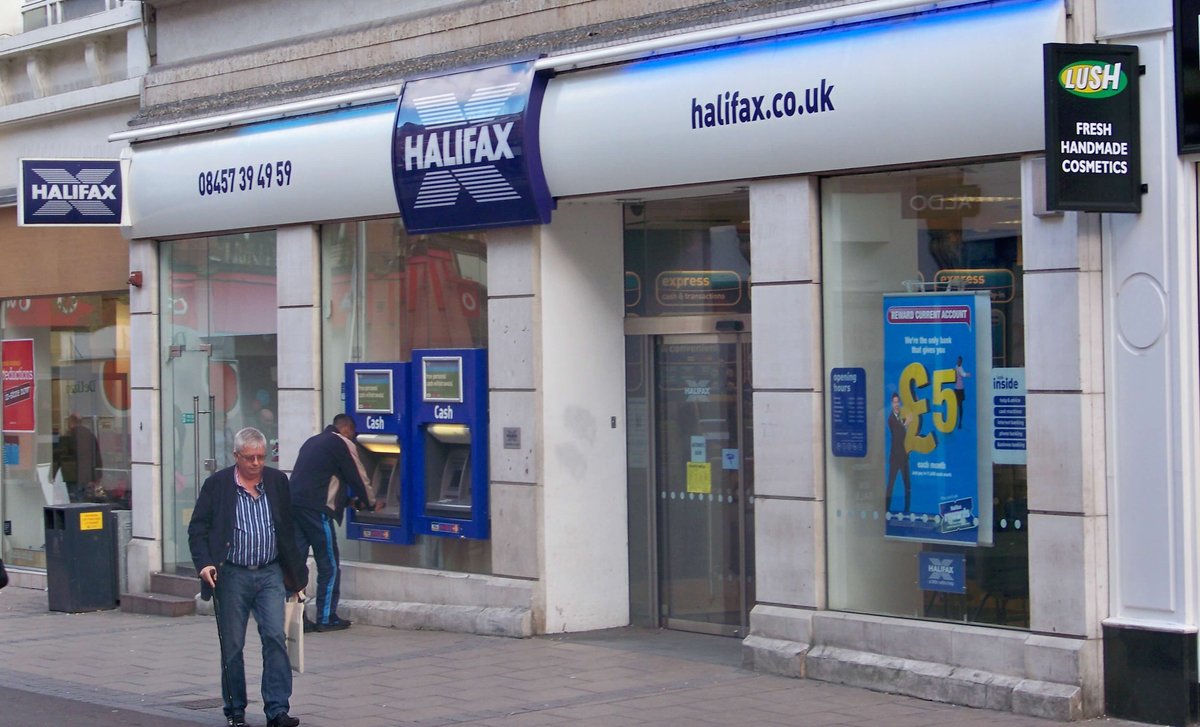
Lloyds Banking Group’s Brand Review Signals a Bigger Shift
Halifax has long been one of the most familiar names on Britain’s high streets, so talk of its disappearance is more than a routine rebrand. It points to a wider reset in how Lloyds Banking Group wants to present itself to customers in an era defined by apps, shared branches and fewer physical locations. Even if no final decision has been made, the direction of travel is hard to miss.
What makes this moment notable is not simply the fate of a single brand, but the symbolism attached to it. Halifax is tied to generations of savers, borrowers and homebuyers, and its name still carries a kind of everyday trust that modern digital-first banking often struggles to replicate. If Lloyds does fold it into a single master brand, that would mark a clear break from the multi-brand identity the group has maintained for years.
A High Street Name With Deep Roots
Halifax is not a recent marketing invention, but a lender with origins stretching back to the mid-19th century. It grew out of a housing need that emerged alongside industrial expansion, when overcrowding and poor living conditions created demand for a mutual institution that could help ordinary people save and borrow. That history gave the brand a practical, almost civic identity that set it apart from more purely commercial banks.
Over time, Halifax became much more than a regional building society. It expanded nationally, played a major role in post-war housing, and later became one of the most recognisable names in British retail banking. Its transformation from mutual to shareholder-owned bank in the 1990s was itself a reflection of broader changes in the financial sector, but the name remained powerful even as the business model evolved.
That kind of legacy is why the possible phase-out feels significant. For many customers, Halifax is not just a logo above a branch door, but a shorthand for reliability, familiarity and a certain era of high street banking. Removing it would not erase its history, but it would remove one of the clearest public markers of that history from everyday life.
Digital Banking Is Rewriting the Rules
The banking industry has been moving towards consolidation for years, and Lloyds is far from alone in trying to simplify its brand architecture. As more customers manage money through smartphones rather than branches, the logic of maintaining multiple consumer-facing names becomes harder to defend. A single brand can reduce confusion, cut costs and create a more uniform digital experience.
Lloyds has already been pushing customers towards a more blended network, where branches and apps are no longer tied as tightly to one brand. Shared branches, standardised uniforms and cross-brand access all suggest a group thinking less like a collection of separate banks and more like one integrated service platform. In that context, Halifax’s future is not just a branding issue, but part of a larger operational strategy.
Still, there is a risk in assuming customers care only about efficiency. Banking is one of the few industries where legacy can still matter a great deal, especially when trust is built over decades rather than months. A familiar brand can reassure older customers, local communities and people who simply want continuity in a sector that often feels impersonal.
Branch Closures and Customer Experience Will Shape the Reaction
Any move to retire Halifax would land in a climate already shaped by branch closures and reduced in-person banking. That matters because the public often experiences brand change and physical change at the same time, which can make a strategic simplification feel like a loss rather than an upgrade. If a name disappears while branches are also closing, customers may see not progress but retreat.
For existing account holders, the practical implications may be limited. Account numbers are expected to stay the same under any migration plan, and regulatory protections would remain in place. But banking is not only about technical continuity; it is also about emotional familiarity, especially for customers who have stayed with a brand for years or even decades.
The real test will be whether Lloyds can make the transition feel seamless rather than imposed. If customers are shifted gradually and given clear reasons, the move may be accepted as the inevitable shape of modern banking. If it feels abrupt, however, Halifax’s retirement could become a cautionary tale about how corporate simplification can flatten something people still value.
What Halifax’s Future Says About the UK High Street
The possible disappearance of Halifax would say as much about the high street as it does about the bank itself. Britain’s retail banking landscape is no longer built around prominent local branches and competing names on every corner. It is being reshaped by digital habits, tighter margins and the relentless pressure to do more with less.
That does not mean history no longer matters. In fact, the more anonymous banking becomes, the more customers may notice when an old and trusted name vanishes. Halifax’s story captures a larger tension in modern finance: institutions want the savings of consolidation, but customers still respond to identity, memory and place.
If Lloyds does proceed, it will not simply be retiring a brand. It will be closing a chapter in the story of UK banking, one that began with building societies, travelled through demutualisation and merger, and now appears to be heading towards digital uniformity. The question is whether the efficiency gained will outweigh the cultural cost of losing one of the high street’s most enduring names.