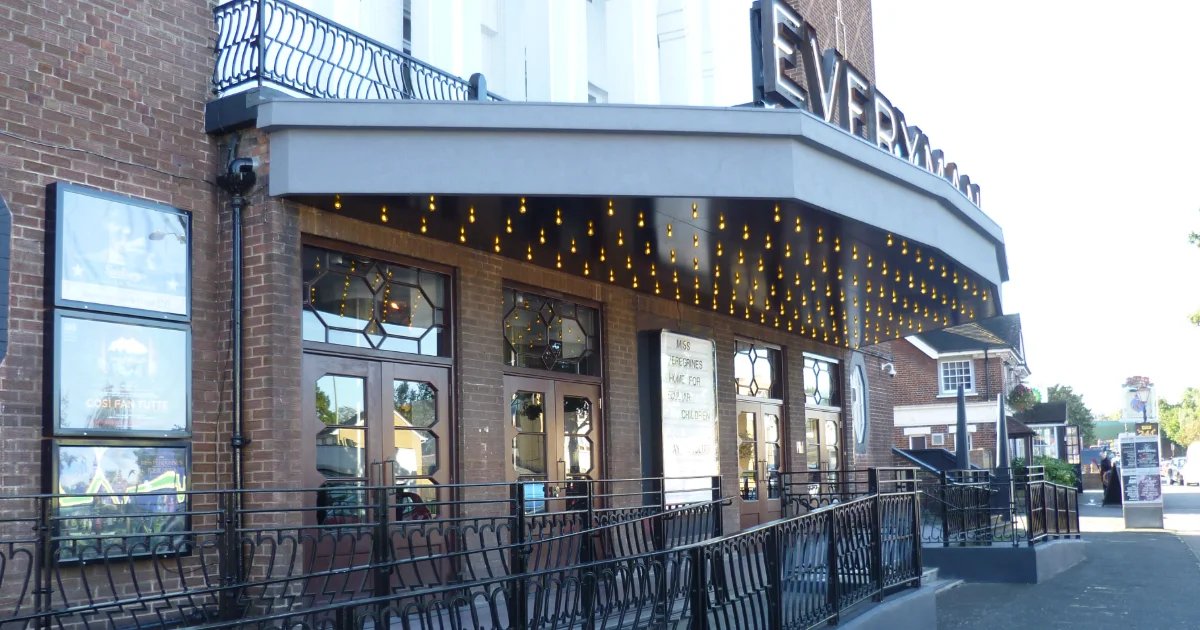
The brand still has pull, but the market is harsher now
Everyman built its reputation by making cinema feel like a night out rather than a transaction. Sofas, table service, polished interiors and a food-and-drink offer that sits somewhere between brasserie and bar gave it a distinctive edge. For years, that formula made it the obvious choice for consumers who wanted cinema without the hard edges of the multiplex.
The problem is that a brilliant idea is easiest to copy once it has already proven itself. Larger rivals such as Odeon and Vue have pushed into premium formats, narrowing Everyman’s differentiation. At the same time, the wider UK cinema market is still not back to its pre-pandemic shape, with 2025 admissions at 123.5 million, around 30% below 2019 levels.
That matters because Everyman does not just need people to visit cinemas. It needs them to pay for a more expensive, higher-touch experience often in a consumer environment where households remain cautious. Its brand still carries warmth and status, but brand equity alone is not a business model.
Expansion hid the cracks for longer than it should have
For much of the post-pandemic period, Everyman kept telling a good story through new openings. Site growth made the numbers look lively, but it also masked the fact that parts of the estate were underperforming. That is a classic retail and hospitality trap: growth can disguise weak productivity until the debt, rent and depreciation catch up.
The financial strain has been real. Everyman has accumulated more than £56m in pre-tax losses over the past six years and has not posted a pre-tax profit since 2019. It has also taken more than £6m in impairment charges over the last three years, a sign that some venues are not generating cashflows strong enough to justify their carrying value.
That combination is especially awkward for a premium operator. A luxury concept can support higher prices only if the experience feels consistently special, efficient and local. If too many sites are merely adequate, the economics turn from aspirational to fragile very quickly.
Leadership change suggests the turnaround has become urgent
The latest chapter has been messy. Everyman issued a profit warning in early December, then saw its finance director depart, and by the end of the month Alex Scrimgeour had stepped down as chief executive with immediate effect. That kind of sequence usually tells investors that the board believes the situation needs a different tempo and a different style of leadership.
Farah Golant, who became interim chief executive, has already frozen expansion to focus on debt reduction. That is a sensible first move because it forces attention back onto cash, returns and operational discipline. With net debt around £21.6m and investor patience thinner than before, Everyman cannot afford to keep adding complexity faster than it adds profit.
The market seems to have welcomed the reset, with the share price recovering after the leadership change. But a bounce is not the same as a solution. The real test is whether the company can shift from being a venue-builder to a margin-builder.
The fix is likely to be operational, not theatrical
The biggest opportunity may be in the plumbing of the business rather than the mood lighting. Analysts have suggested pre-ordering before arrival, which could reduce bottlenecks, speed service and improve kitchen utilisation. That is exactly the sort of change that can increase food and beverage margins without diluting the premium feel.
Membership is another lever worth pulling harder. Everyman’s paid scheme already has a meaningful base, with around 67,000 members after strong growth last year, but it can still be used more intelligently to drive repeat visits, higher spend and better forecasting. A premium brand should not just attract first-time visitors; it should create habits.
There is also an audience shift that could still work in Everyman’s favour. Gen Z consumers increasingly value experiences that feel social, sharable and distinct from streaming at home. If Everyman can package itself as a third place for dates, groups and family outings, it can turn its softness into strength rather than nostalgia.
Everyman’s next phase depends on discipline, not nostalgia
The clearest lesson from Everyman’s recent stumble is that premium positioning does not immunise a business from execution risk. In fact, it can amplify it, because customers pay extra only when the experience consistently justifies the premium. Once rivals copy the format, the winner is usually the operator that manages costs, throughput and site quality best.
That makes the next year pivotal. The chain still has strong brand recognition, family backing and a product people genuinely like. It also sits in a UK cinema market that is recovering unevenly but still showing signs of life, especially around event films and experience-led spending.
Everyman can regain momentum, but probably not by chasing scale for its own sake. Its magic was never just luxury seating; it was the feeling that the cinema had been reimagined for a more modern customer. To recover that edge, it now needs to prove that premium can also mean disciplined, efficient and profitable.