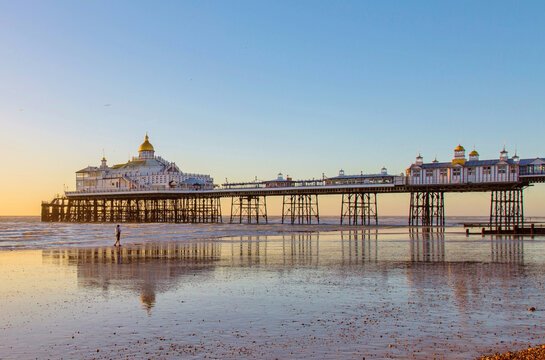
A seaside icon under strain
Eastbourne Pier has long been one of the most recognisable features on the Sussex coast. For generations, it has offered the familiar mix of sea air, entertainment, and Victorian character that defines the British seaside. Now, its future has been thrown into doubt after the company operating it was forced into compulsory liquidation.
That development is more than a technical legal event. For residents, traders, and visitors, it raises an immediate and uncomfortable question: what happens next to a landmark that is both a business and a symbol of place? When a pier enters insolvency, the damage is rarely confined to the balance sheet.
The uncertainty is especially sharp because the pier sits at the intersection of heritage and private ownership. That makes any failure around its operator feel bigger than a standard corporate collapse. It becomes a test of whether a historic public-facing asset can survive the kind of financial pressure that often strips character from coastal towns.
What compulsory liquidation means for the pier
Compulsory liquidation is not a voluntary shutdown chosen by directors. It is a court-driven process, usually triggered by an unpaid creditor, and it places the company in the hands of the Official Receiver. From that point, control shifts away from the business owner and into a formal insolvency procedure.
That matters because the Official Receiver does not simply close the books and walk away. The role includes investigating why the company failed and examining the conduct of its directors. If misconduct is found, the consequences can be severe, including possible disqualification from company directorship.
For Eastbourne Pier, the key issue is ownership. If the structure itself belongs to the liquidated company, it may be sold as part of the process. If the freehold sits elsewhere, the collapse of the operating company may not automatically remove control of the asset, which keeps the future far less certain.
Abid Gulzar’s wider business troubles
The liquidation has also reopened wider questions about Abid Gulzar’s business record. He has already been linked to the financial collapse of other ventures, including hospitality and pier-related companies. That history inevitably colours public confidence whenever one of his assets comes under pressure.
Hastings Pier has become part of that same story. Its ownership structure, legal status, and financial difficulties have drawn scrutiny in recent years, especially after the operating company entered liquidation and the asset later became frozen. When one operator is linked to multiple troubled properties, every new setback invites the same uncomfortable pattern of questions.
There is also the separate fraud case waiting at Lewes Crown Court. Whatever the outcome, the existence of that trial deepens the sense that this is not just a single-company failure. It is a broader collapse in trust around stewardship, accountability, and the management of important coastal landmarks.
Why Eastbourne cares so much
Eastbourne Pier is not just another attraction on the seafront. It is part of the town’s identity, woven into tourism, local trade, and civic memory. The pier has historically offered arcades, cafés, and entertainment, but its value goes beyond what visitors spend in a single day.
That is why the local council’s response has been careful and measured. Officials know that if the pier deteriorates, the impact will be felt not only in visitor numbers but in the wider image of the town itself. A neglected pier sends a message that is hard to ignore in a place built partly on its coastal charm.
There is also a deeper cultural issue at stake. British piers are fragile assets, expensive to maintain and easy to lose if stewardship falters. Once that decline begins, it can be very difficult to reverse, which is why this liquidation feels like a warning as much as a legal development.
The real test now is ownership and action
The next decisive question is simple, even if the answer is not. Who owns the physical pier, and what rights do the insolvency proceedings actually reach? If the liquidated company owns the structure, the Official Receiver may be able to move quickly. If not, the situation becomes more tangled and potentially more prolonged.
That distinction will shape whether Eastbourne Pier is restored, sold, or left in limbo. It also determines whether the town faces a short-term legal process or a long-term battle over a much-loved landmark. In coastal communities, uncertainty often does as much harm as outright loss.
For now, the pier remains open in name, but its future is hanging on a legal and financial thread. The next phase will decide whether Eastbourne keeps a working seafront asset or inherits another symbol of neglect. Either way, this is no longer just a business story; it is a civic one.