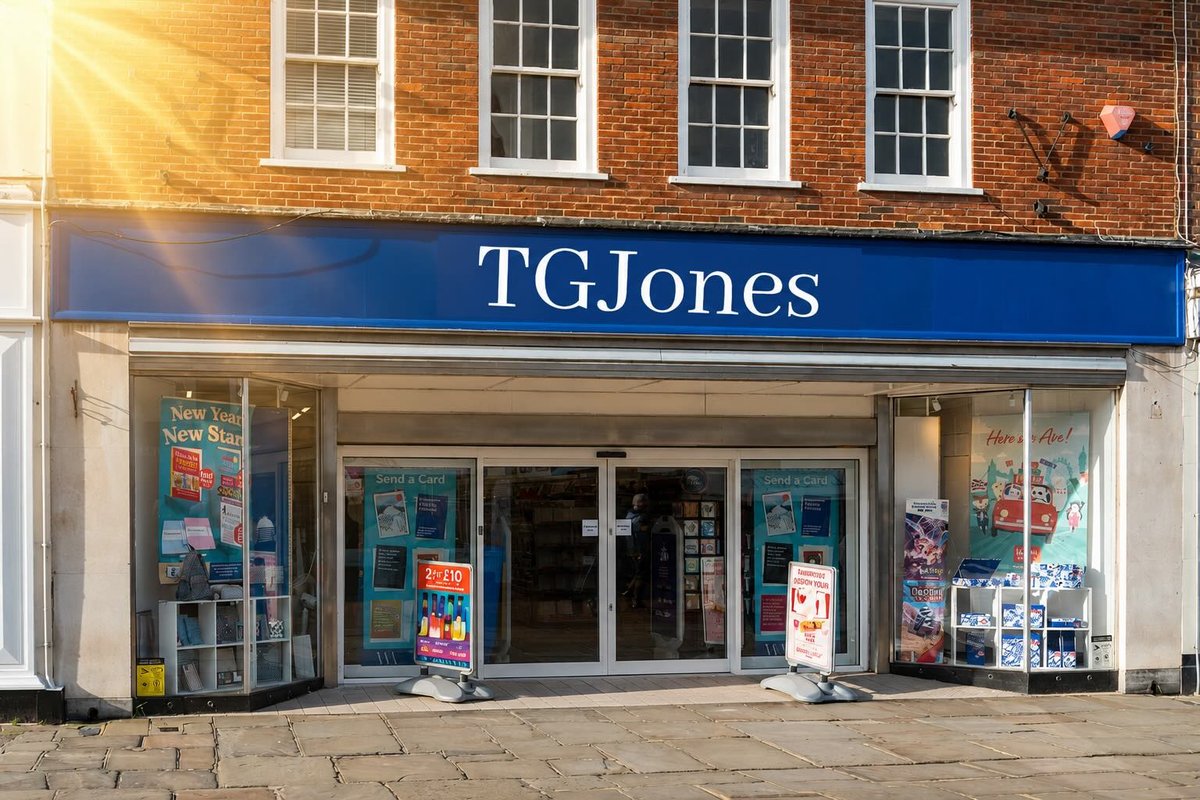
High Court Sanction Gives TG Jones a Critical Lifeline
Mr Justice Hildyard sanctioned the Part 26A Restructuring Plan for TG Jones this morning.
Plans to keep TG Jones trading have been approved by the High Court, giving the chain a decisive but hard-won path away from immediate insolvency. The ruling follows a warning from lawyers that the business faced an £8 million shortfall within days if the court did not sanction the restructuring. The judge acknowledged the difficulty of the decision, but ultimately accepted that the proposals had a realistic prospect of achieving their purpose.
That matters because this is not just a procedural win; it is a recognition that the company needed fast, practical intervention. With an extra £15 million loan from Modella Capital added to the £10 million already provided in April, the chain now has breathing space to reset its cost base. The decision also confirms reduced rent terms for landlords, which will be central to whether the business can be stabilised.
We have not yet seen a copy of the judgment, but Mr Justice Hildyard will have had to draw on all his experience to come to a decision that, like the judgment of Solomon, delicately deals with competing arguments and comes down on the side of common sense. Fortunately, he is an exceptionally able judge and the right judge for the right circumstances.
There will be many opinions about the outcome, but few from people willing to take responsibility for their own actions in a market where closing a company should be a last resort. Always remember Carillion.
TG Jones has been granted time, but time only has value if management uses it to deal with the structural economics that pushed the business to this point. The High Court has opened the door; execution will determine whether the chain walks through it.
Why TG Jones Needed Restructuring Now
The fall from grace of TG Jones is a reminder that restructuring is often a polite way of saying that unprofitable stores have to close. Over many years, property costs have risen sharply, and experienced and sophisticated retail and hospitality operators have been fighting back for some time. Some have managed to pass those costs on to customers; many others have gone bust.
Alongside labour and taxes, property has been a major driver of cost inflation, and that has helped shift consumer behaviour in ways that are unlikely to reverse. Those are one-way trends. They have changed the economics of fixed-site retail and will continue to do so. The result will be unpleasant for landlords, just as it has been for operators who have found themselves unable to make old site economics work in a new market.
TG Jones has been under pressure from forces that have been building for years, not months. Sales have been hit by inflation, weaker consumer spending, the continued migration to online shopping, and higher labour and tax costs. On top of that, the rebrand away from WH Smith appears to have caused additional commercial drag, rather than delivering an immediate lift.
The company’s problem is not simply one of trading weakness. It is the weight of a fixed-cost estate that no longer matches the economics of the market. When rent, staffing and site costs keep rising faster than revenue, even a well-known brand can become fragile very quickly.
That is why the court process is so important here. It gives TG Jones the chance to acknowledge that some stores are no longer viable under the old economics. The working assumption that around 150 branches may close suggests the company is preparing for a leaner footprint rather than pretending every location can be saved.
The Landlord Dilemma
The court-approved plans will almost certainly be felt most sharply by landlords. Those who refuse the revised rent terms can terminate the lease, which means the company is forcing a hard conversation about who absorbs the pain of restructuring. That shift reflects a broader change in retail power dynamics, where the old assumption of full repairing and insuring leases has been challenged by restructuring tools designed to rebalance the relationship.
Landlords were once the bogeymen because of their ability to demand full repairing and insuring leases. But they deserve some sympathy too. The reality is that restructuring tools have gained traction precisely because they redress the balance of power and change the terms of an FRI lease. In theory landlords can take back their premises if they do not accept the revised terms. In practice, there are very few operators willing to take on expensive leases in the current market, so landlords are often left kicking up a fuss in the face of reality.
There is sympathy due on both sides, but not in equal measure. Landlords have spent years benefiting from rigid lease structures, yet many now face assets that are expensive to re-let and harder to justify at historic rents. The result is a negotiation environment where neither side has much leverage, and the only workable answer is often a compromise.
The better answer is a partnership model in which both costs and spoils are shared more fairly. Turnover-based rents make increasing sense in that context. If the relationship between retailer and property owner is to survive, both sides need to share upside and downside more openly. Fixed rent models are proving too brittle for a market defined by volatility, online competition and compressed margins.
What the TG Jones Case Says About High Street Economics
The TG Jones case is not an isolated rescue story. It is a blunt reminder that fixed-site retail is operating with very thin net margins in a world where almost every input cost has moved against it. Labour, premises and taxes are all taking larger shares of gross margin, while consumers remain price-sensitive and less loyal than before.
That leaves management teams with a brutal choice: restructure early or collapse later. In this case, the company appears to have moved before the damage became irreversible, which may be the most commercially rational decision available. Credit to suppliers is reportedly limited, which may be due to credit limits with large suppliers, suggesting the real pressure point was the estate rather than a wider liquidity crisis.
There is a wider lesson here for retail and hospitality operators. If the cost base is structurally misaligned, waiting for demand to recover is not a strategy. The businesses that survive will be the ones that redesign around today’s economics, not yesterday’s assumptions.
The real debate should be about the fair division of gross margin between labour, premises and taxes. All three are in danger of forcing the closure of many businesses. That is the uncomfortable reality behind a great deal of modern retail restructuring.
A Leaner Future for the Chain and the Towns It Serves
For TG Jones, the approved plans create a chance to become smaller, sharper and more sustainable. That may sound like retreat, but in restructuring terms it can also be the foundation for a healthier business. A trimmed estate with more realistic rent terms could preserve the strongest branches, protect jobs where possible and restore a degree of operational focus.
This is where Mike Ashley understood the model years ago. He bought retail chains and took a hard line on the cost base because he understood that fixed-site retail can only survive if the economics are reset quickly and brutally. That may not be popular with commentators, but popularity is not the point. The point is whether the business survives at all.
The High Court has given TG Jones the legal clearance to try. Now the commercial discipline has to follow. If the company uses this moment to rebuild around viable stores, lower fixed costs and realistic landlord terms, the judgment may be remembered as the point at which the business began to stabilise rather than the moment it was merely delayed.