The Final Exit: James Watt's Director Termination Marks End of BrewDog Era
James Watt's journey with BrewDog officially ended on 24 March when he formally resigned as director, requesting administrators to file the termination paperwork at Companies House. The resignation letter, which surfaced publicly, confirmed his compliance with obligations under the BrewDog investment agreement, including stepping down from all other companies within the group. This marked the definitive conclusion of his involvement with the business he launched from a Fraserburgh garage alongside Martin Dickie in 2006.
The termination represents the final chapter in a two-year transition that began when Watt stepped down as chief executive in 2024. Despite relinquishing the CEO role, he had maintained a presence as a non-executive director, continuing to brand himself as "captain and co-founder" of the Scottish craft beer company. His co-founder Martin Dickie had already departed earlier, resigning as director in August 2025 for personal reasons, leaving the business and the wider alcohol sector entirely.
The removal of directors is standard procedure when companies enter administration, as directors immediately lose their power to manage operations. This authority transfers entirely to administrators who focus on maximising asset value to repay creditors. While some directors remain to provide operational knowledge during administration processes, Watt's departure signals a clean break from the company that once carried a speculative valuation of £2 billion.
From £2 Billion Valuation to £33 Million Sale: The Scale of Collapse
BrewDog entered administration on 2 March 2026, with Clare Kennedy, Ian Partridge and Ben Browne of AlixPartners appointed as joint administrators. The administration covered BrewDog PLC, BrewDog International Ltd, BrewDog Retail Ltd and Draft House Holding Ltd. Within days, Tilray Brands completed acquisition of strategic assets including the global brand, intellectual property, UK brewing operations and eleven brewpubs for £33 million.
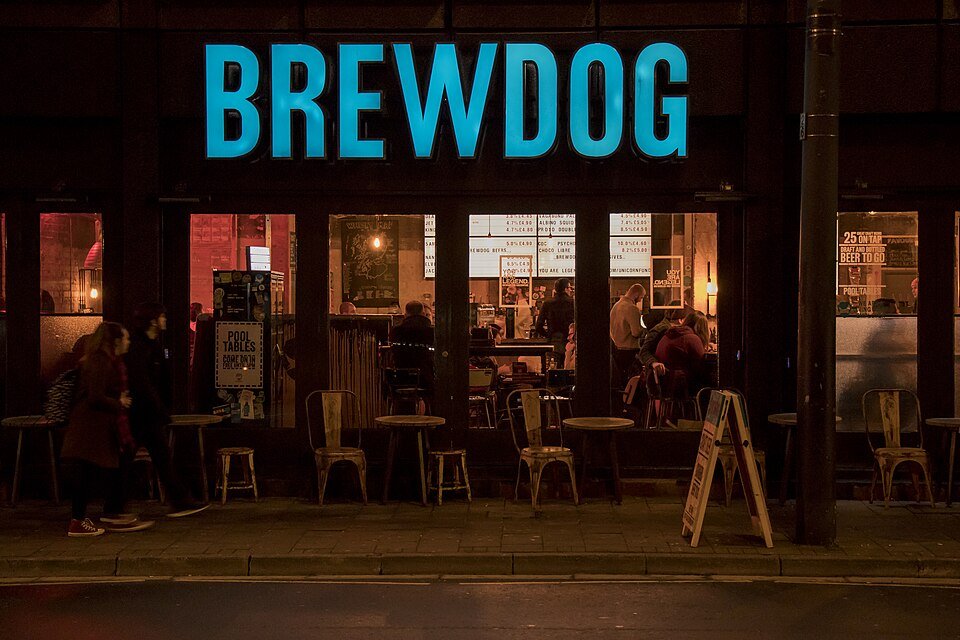
The deal preserved 733 jobs tied to the Ellon brewery and selected bars, but resulted in devastating losses elsewhere. Thirty-eight BrewDog pubs closed immediately, pushing 484 people into redundancy. The bars acquired by Tilray included Birmingham, Canary Wharf, Dogtap Ellon, Dublin, Edinburgh DogHouse, Lothian Road, Manchester, Paddington, Seven Dials, Tower Hill and Waterloo. Tilray later added five more former sites back into the portfolio, bringing the estate to sixteen pubs.
The financial devastation extended far beyond job losses. Administrator reports revealed BrewDog's debts exceeded £550 million at the point of administration, with creditors owed £553.8 million collectively. Unsecured creditors, owed nearly £395 million, face returns of approximately one penny in the pound. Major lender HSBC confronts an estimated £85 million shortfall, with £32.5 million lost on bar division lending and approximately £25 million on the main PLC business.
Equity for Punks Investors Left With Nothing
The most controversial aspect of BrewDog's collapse centres on the fate of Equity for Punks investors. Between 2009 and 2021, the groundbreaking crowdfunding scheme raised £75 million from more than 220,000 individual investors across seven funding rounds. These retail investors purchased ordinary shares, with average investments around £400, believing they were backing a revolutionary craft beer movement.
Administrators confirmed that all equity holders have been completely wiped out, with shares holding no value following the administration. The structure of BrewDog's 2017 private equity deal proved catastrophic for these small investors. When TSG Consumer Partners invested £213 million for a 22.3% stake, the deal included preference shares that gave TSG priority over ordinary shareholders in any sale or liquidation scenario. This meant crowdfunding investors stood last in line behind secured and unsecured creditors.
At the time of administration, Watt and Dickie together held more than 40% of BrewDog shares, with Watt owning 14,277,037 shares (19.15%) and Dickie holding 15,744,233 shares (21.12%). These holdings became effectively worthless alongside the Equity for Punks investments. However, the founders had already realised significant value from the 2017 TSG deal, selling portions of their shareholding for approximately £100 million between them in a secondary sale transaction.
Watt's Response and Criticism of Tilray's Approach
Following the sale, Tilray CEO Irwin Simon publicly stated the business needed to move beyond the "stigma" associated with Watt's leadership. This prompted a pointed response from Watt on LinkedIn, where he disputed the characterisation and criticised the outcome for retail shareholders. He claimed to have discussed the importance of protecting the community of investors with Simon before the acquisition.
Watt wrote that Simon had given clear indication that if Tilray bought the business, Equity Punks would retain their equity stake. He expressed deep disappointment that this did not materialise, stating it was something he would never have done. His post emphasised that any genuine BrewDog fightback required taking the community along, honouring all team shares and reinstating the real living wage.
The public exchange highlighted tensions between BrewDog's founder-driven past and its corporate future under Tilray ownership. Watt had earlier posted an apology acknowledging strategic missteps, admitting the company expanded too fast and diversified too broadly during its rapid growth phase. He described himself as heartbroken for Equity Punks investors who did not receive their desired returns, whilst defending his commitment to building BrewDog from a garage operation to what he termed the world's leading independent beer brand.
The Broader Context: Craft Beer Industry Struggles and BrewDog's Legacy
BrewDog's collapse occurred alongside similar struggles in Scotland's brewing sector, with Innis Gunn also entering administration in March 2026. However, public reaction to the two failures differed markedly. While Innis Gunn founder Dougal Sharp received sympathy for his advocacy of Scottish brewing and refusal to criticise competitors, Watt faced considerably harsher judgment due to numerous controversies during his tenure.
The company had faced mounting financial pressures throughout 2025, with losses doubling to £59 million in Watt's final year as CEO. BrewDog closed ten locations in July 2025 with just four days' notice, prompting trade union Unite to describe the short notice periods as "morally repugnant" and "potentially unlawful". The company briefly returned to profitability in June 2025, reporting adjusted earnings before tax of £7.5 million, but this proved insufficient to overcome accumulated debts.
Despite the financial catastrophe, BrewDog's impact on craft beer culture remains undeniable. The brand energised a stale beer scene and inspired countless brewers to challenge established players. Tilray expects the acquisition to add $500 million in annual revenue to its diversified beverage platform. The company has stated intentions to stabilise operations before pursuing growth, though whether the BrewDog brand can thrive without its controversial founder remains to be seen. For the 220,000 Equity for Punks investors and 484 redundant employees, however, the legacy is one of financial devastation and broken promises.