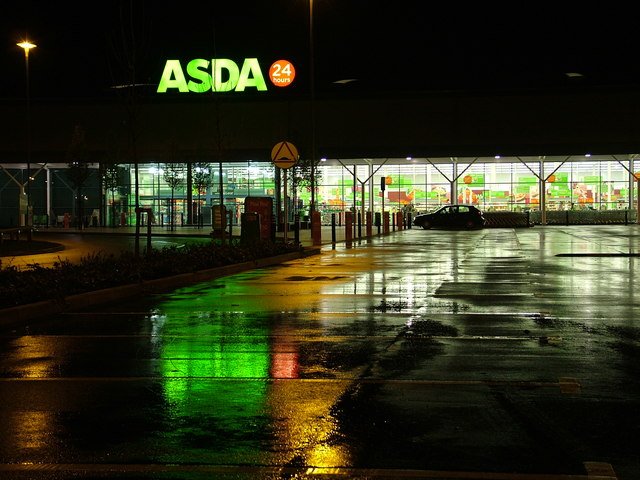
Asda’s recent performance highlights how quickly ground can be lost in UK grocery retail. Market share has fallen from 14.3 per cent to 11.4 per cent, Christmas sales declined by 4.2 per cent, and the revenue gap relative to simply holding share now runs into billions. In a business defined by high fixed costs and narrow operating margins, volume decline carries disproportionate consequences.
Supermarkets rely on scale to absorb property, logistics and labour costs. When volumes fall, those fixed costs are spread across fewer transactions, compressing profitability. Recovery then requires either significant cost restructuring or sustained volume growth, both of which demand capital and operational discipline.
In this context, lost share becomes more than a headline statistic. It signals shifting consumer habits, reduced store productivity and weakening brand preference. Once customers adjust their weekly shopping routine, winning them back becomes materially more expensive than retaining them in the first place.
Where Asda’s Customers Have Gone
The share Asda has ceded has dispersed across a disciplined and well differentiated competitive set. Tesco has combined targeted price investment with the behavioural pull of Clubcard, reinforcing a value proposition that feels measurable and consistent. Loyalty architecture has become a structural advantage rather than a promotional tactic.
Aldi and Lidl continue to expand through operational simplicity and price clarity. In an inflationary environment, their limited range model offers transparency and efficiency, both of which resonate with cost conscious households. Sainsbury’s has tightened execution while leveraging Nectar to deepen retention, improving the reliability of its offer.
Ocado serves a different segment but one that continues to grow: customers who prioritise convenience, curated assortment and digital ease. Each competitor has sharpened its proposition. Asda, by comparison, sits in an increasingly narrow middle ground without clear leadership on price, loyalty or experience.
The Limits of a Price-Led Turnaround
The return to Rollback and the commitment to be 5 to 10 per cent cheaper than traditional rivals reflect a coherent strategic instinct. Price remains the most visible signal in grocery retail, and early surveys suggest progress in narrowing gaps. The message to consumers is straightforward and familiar.
However, price functions alongside availability, store standards, staffing levels and overall environment. Reports of empty shelves and inconsistent execution weaken the credibility of a value promise. A lower shelf price does not compensate for friction in the shopping experience.
Retail performance rests on both perception and delivery. If operational standards fall short, price investment can struggle to translate into sustained share recovery. Customers assess the whole experience, not a single metric.
Debt, Financing Costs and Strategic Headroom
The balance sheet presents a structural constraint. Net debt of approximately £3.8bn and annual financing costs exceeding £600m limit discretionary investment. Every pound allocated to price or refurbishment competes with interest obligations.
Asset sales and leasebacks can provide liquidity and ease covenant pressure, yet they do not materially expand strategic flexibility. Sustainable turnarounds require time, capital and the capacity to absorb short term volatility. High financing costs compress that margin for manoeuvre.
The challenge is therefore dual: rebuild a clear customer proposition while operating within financial limits that restrict pace and scale. Execution becomes more demanding when capital is scarce.
The Difficulty of Regaining Lost Share
Retail history suggests that defending share is materially easier than rebuilding it. Grocery shopping is habitual. Once households integrate a new retailer into their weekly routine, the cost of reacquisition increases through promotions, marketing spend and price investment.
Asda’s current strategy reflects a rational reading of its heritage and core customer base. The difficulty lies in the scale of decline relative to the resources available to reverse it. Competitors are not standing still, and several operate with stronger balance sheets and more developed loyalty ecosystems.
Pricing alone cannot resolve structural weaknesses in execution or capital structure. For a turnaround to succeed, strategy must be matched by operational consistency and funded with sufficient headroom. Without that alignment, market share will continue to migrate toward retailers offering clearer propositions and stronger financial backing.