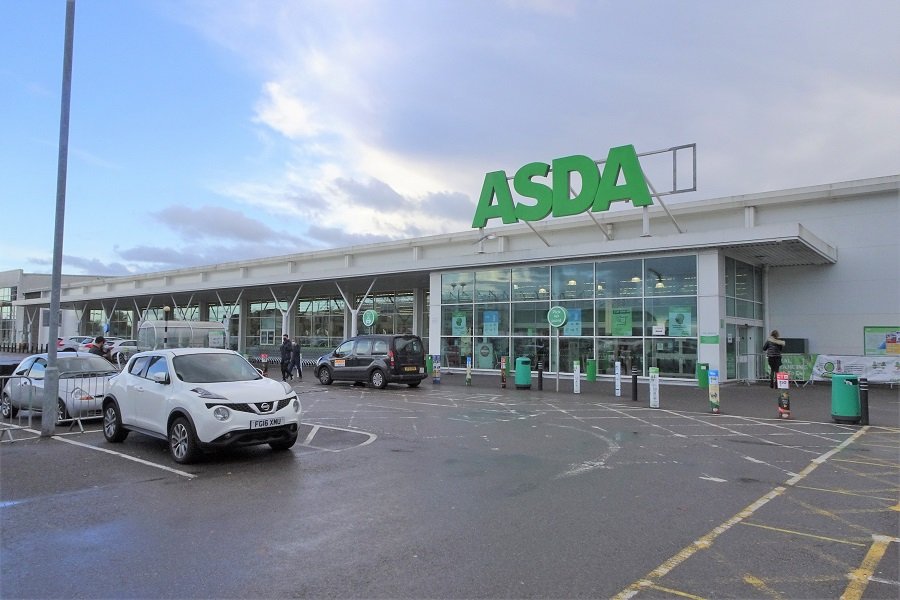
Price Cuts Come at a Cost
Asda’s latest annual figures show the brutal arithmetic of retail recovery: lower prices can bring shoppers back, but they can also crush profits in the short term. The supermarket posted a pretax loss of £989 million for 2025, almost double the previous year’s result. That headline number reflects a deliberate strategy to sharpen value at a time when budget-conscious customers are under pressure.
Executive chair Allan Leighton has made clear that the business is trying to reset its offer rather than defend margins at all costs. The aim is to be meaningfully cheaper than traditional rivals, a move designed to rebuild trust with shoppers who have drifted towards discounters. In a market as unforgiving as UK grocery, price perception can be as important as price itself.
This is not simply a story of one bad year. It is a sign that Asda is choosing to absorb pain now in the hope of regaining relevance later. The question is whether customers will reward that sacrifice quickly enough to justify it.
The One-Off Charges Behind the Damage
The near-£1 billion loss was not driven by trading alone. A large chunk of the damage came from £656 million in one-off costs, including a £284 million charge linked to the completion of Asda’s IT separation from Walmart. Another £344 million hit came from revaluing its property portfolio.
Those items matter because they distort the underlying picture. They are not part of the normal day-to-day economics of selling groceries, but they do tell you how much structural change the company has had to absorb. Large transformation projects often look messy on paper before they start to pay back.
Even so, transformation costs do not exist in a vacuum. They coincide with weaker sales, lower underlying earnings, and an organisation still dealing with the consequences of supply and availability problems. That makes the accounting loss feel less like a single event and more like the visible edge of a wider recovery effort.
Why Asda Is Betting on Volume Over Margin
Asda’s logic is straightforward: if enough shoppers return, the lower price points should drive volume and improve the long-term position of the brand. That is the classic supermarket trade-off, where short-term profitability is sacrificed to protect market share. It is a risky move, but one that can make strategic sense when a retailer has lost ground.
The problem is that competitors do not stand still. Tesco, Sainsbury’s, Aldi and Lidl all operate in a market where value is heavily scrutinised, and every price move gets answered quickly. Once a grocer signals that it is willing to cut harder, the whole sector tends to get dragged into the same game.
Asda’s challenge is therefore bigger than simply lowering prices. It must convince customers that its value offer is durable, its shelves are reliably stocked, and its stores are worth returning to. Without that combination, a cheaper basket alone may not be enough.
Balance Sheet Strength Does Not Equal Trading Strength
Asda has been keen to stress that the reported loss does not tell the whole story. It ended the year with £1.3 billion in cash and £2.1 billion of total liquidity, while net debt fell by £500 million to £3.1 billion. That gives the company breathing room, which matters when a turnaround will likely take years rather than quarters.
Still, liquidity is not the same as momentum. A business can have a solid balance sheet and yet be losing customer share, sales growth, and pricing power. In retail, cash can buy time, but it cannot buy loyalty on its own.
The longer-term test is whether those resources are being used to create a stronger operating model. If the price investment improves customer perception and stabilises sales, the losses may prove temporary and purposeful. If not, the business risks spending heavily just to stand still.
A Turnaround Measured in Years, Not Headlines
Asda’s leadership has already indicated that rebuilding the business could take up to five years. That is a realistic timeframe for a chain trying to fix availability, simplify its systems, recover market share and reposition itself on value all at once. The recent results fit that picture: disappointing in the short term, but not necessarily terminal.
What matters now is execution. Customers will not wait for corporate strategy documents, and they will judge Asda by what they see in-store each week: prices, availability, quality and consistency. If those basics improve, the financial pain may be easier to defend.
For investors and shoppers alike, the key lesson is that supermarket turnarounds are rarely neat. They tend to look expensive before they look successful. Asda has chosen to fight for relevance the hard way, and the next few years will show whether that gamble was disciplined or merely desperate.