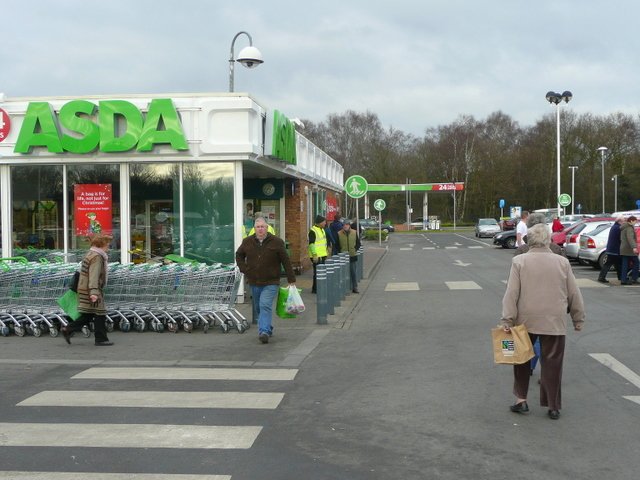
Asda Reports Sharp Christmas Sales Decline as Market Share Hits Record Low
Asda has emerged as the only major UK supermarket to record falling sales over the crucial Christmas trading period, posting a concerning 4.2 per cent decline in festive revenue. The retailer's market share has plummeted to 11.4 per cent in the 12 weeks to 28 December, marking its lowest level in recent years and continuing a troubling downward trajectory. This poor performance stands in stark contrast to competitors Tesco and Sainsbury's, both of which successfully increased customer numbers during the same period. The disappointing results have prompted immediate action from the struggling supermarket chain, which now faces difficult decisions about its workforce and operational structure.
The scale of Asda's underperformance becomes even more apparent when compared to its position just five years ago. In 2021, when the retailer was acquired by private equity firm TDR Capital and brothers Mohsin and Zuber Issa, it commanded a 14.8 per cent market share. Since then, the company has steadily lost ground to competitors, shedding more than three percentage points of market share in a highly competitive grocery sector. Chairman Allan Leighton, who previously led a successful turnaround in the 1990s, returned to the business but has yet to reverse the recent decline. The Christmas trading figures represent another setback in what has been a challenging period for the supermarket giant.
The financial pressures facing Asda extend beyond declining sales figures, with credit ratings agency Fitch downgrading the retailer further into junk status last year. This downgrade raises serious concerns about the company's borrowing costs and overall financial stability. A £1.3 billion term loan from parent company Bellis Finco has fallen sharply in value, trading as low as 88 cents on the euro. These financial challenges, combined with poor trading performance, have created a perfect storm that is now forcing the retailer to make difficult decisions about its workforce and operational efficiency.
Over 150 Roles Face Redundancy Across Management and Warehouse Operations
Asda has confirmed that more than 150 positions are now at risk of redundancy as the supermarket attempts to streamline its operations and reduce costs. The proposed cuts include more than 80 management roles, with dozens of warehouse positions also expected to be affected across the retailer's distribution network. Redundancy consultations are currently under way across several of Asda's distribution centres to determine the final number of job losses. The company has emphasised that these consultations are designed to improve operational efficiency, though the timing coincides directly with the poor Christmas trading results.
Trade union GMB has stepped in to support affected members throughout the consultation process, representing staff in both collective consultations and individual meetings. In a message to distribution workers, the union acknowledged the uncertainty facing employees: "For some of you, finding out that Asda are proposing to make big changes that may put your job at risk will leave you with many more questions than answers." The GMB has pledged to stand by workers every step of the way, committing to do everything possible to protect jobs. Workers in Yorkshire face particular uncertainty under the proposals, with several distribution centres in the region potentially affected by the restructuring plans.
These latest redundancy proposals follow several rounds of job cuts over the past 18 months, suggesting a pattern of ongoing workforce reductions. In July, Asda reduced in-store management roles across its estate, impacting hundreds of employees. Additionally, hundreds of IT staff were made redundant following a failed technology upgrade that cost the company significant resources without delivering the expected benefits. The cumulative effect of these job losses represents a substantial reduction in Asda's workforce and raises questions about the company's long-term strategy and ability to compete effectively in the UK grocery market.
Regional Transport Hub Restructure Targets Distribution Network Efficiency
Asda has confirmed that two separate consultations are taking place across its 21 depots nationwide, with the first focusing on a major restructuring of transport operations. The retailer plans to create eight regional hubs overseen by coordinating offices, fundamentally changing how it manages distribution across the country. An Asda spokesman explained that this approach would "streamline operations, reducing duplicated tasks, improving regional flexibility, creating more consistent ways of working, and lowering our reliance on agency and haulier support." The company believes this regional structure will simplify its distribution network and improve deliveries to stores whilst reducing operational costs.
The proposed regional hub model represents a significant departure from Asda's current distribution structure, which the company views as inefficient and outdated. By consolidating transport operations into eight regional centres, Asda aims to eliminate redundant processes and create more standardised working practices across its network. The retailer has been heavily reliant on agency workers and third-party hauliers, which has driven up costs and created inconsistencies in service delivery. The new structure is designed to reduce this dependence whilst maintaining or improving service levels to stores, though the transition period may create challenges for affected workers and operations.
The transport restructure consultation is expected to affect management roles primarily, as the new regional hub model will require fewer supervisory positions than the current decentralised approach. Asda has not yet confirmed exactly how many colleagues will be affected, stating that both consultations only opened this week and the final numbers will depend on the outcome of discussions with staff and union representatives. The company insists that the changes are necessary to remain competitive in a challenging retail environment where margins are tight and operational efficiency is crucial. However, critics argue that the restructure is a direct response to poor trading performance rather than a proactive strategic initiative.
Evri Partnership to Transform Parcel Handling Across 1,200 Stores
The second consultation concerns Asda's parcel-handling operation, which processes approximately 28 million parcels annually through a network that was never designed for this level of demand. The retailer has acknowledged that its current infrastructure cannot cope with this volume, resulting in service limitations that put it at a competitive disadvantage. Fewer than half of Asda's stores can currently offer next-day parcel collection, a service that customers now expect as standard from all major retailers. This gap in service provision has likely contributed to customer dissatisfaction and lost business to competitors who offer more comprehensive parcel services.
Asda plans to transfer parcel services to delivery firm Evri, enabling all 1,200 Asda stores to offer next-day parcel collection and returns for the first time. The partnership with Evri represents a strategic decision to outsource a function that Asda has struggled to manage effectively in-house, allowing the retailer to focus on its core grocery business. By leveraging Evri's expertise and infrastructure, Asda aims to provide customers with a quicker and more convenient service whilst reducing the operational burden on its own staff and facilities. The move aligns with broader trends in retail where companies increasingly partner with specialist logistics providers rather than building comprehensive in-house capabilities.
The transition to Evri will inevitably affect warehouse staff currently involved in parcel handling operations, though Asda has not specified exactly how many positions are at risk. The company has emphasised that the partnership will improve customer service and operational efficiency, but workers facing potential redundancy may find little comfort in these strategic justifications. The GMB union is actively engaging with Asda throughout the consultation process, seeking to minimise job losses and secure alternative positions for affected employees where possible. The parcel handling restructure, combined with the transport hub changes, represents a comprehensive overhaul of Asda's logistics operations that will reshape the company's distribution network for years to come.
Financial Pressures Mount as Private Equity Ownership Struggles Continue
Asda's performance has deteriorated significantly since its 2021 acquisition by private equity firm TDR Capital and brothers Mohsin and Zuber Issa, raising questions about the ownership model and strategic direction. At the time of acquisition, the retailer held a commanding 14.8 per cent market share, but it has since lost substantial ground to competitors in an increasingly competitive grocery sector. The decline has been steady and persistent, with no signs of reversal despite the return of chairman Allan Leighton, who previously led a successful turnaround in the 1990s. The current situation suggests that the challenges facing Asda are more profound than those that could be addressed through leadership changes alone.
The financial structure created by the private equity acquisition has placed additional pressure on Asda's operations, with high levels of debt constraining the company's ability to invest in stores, technology, and competitive pricing. Fitch's decision to downgrade Asda further into junk status reflects growing concerns about the retailer's ability to service its debt obligations whilst simultaneously investing in the business to compete effectively. The £1.3 billion term loan from parent company Bellis Finco has fallen sharply in value, trading as low as 88 cents on the euro, indicating that financial markets have serious doubts about Asda's prospects. These financial pressures create a vicious cycle where the need to cut costs to service debt undermines the company's ability to compete, leading to further market share losses.
Asda has stated that the current consultations form part of efforts to adapt its operations and improve efficiency whilst responding to changing customer behaviour, but the timing suggests a more urgent response to financial and trading pressures. The company cannot yet confirm how many colleagues will ultimately be affected, as both consultations are still in their early stages. However, the pattern of repeated job cuts over the past 18 months indicates that workforce reductions have become a regular feature of Asda's strategy under private equity ownership. As the consultations progress, affected employees and their union representatives will be seeking assurances about the company's long-term viability and commitment to maintaining employment levels wherever possible, whilst Asda management faces the difficult task of balancing cost reduction with the need to maintain service standards and competitive positioning.